
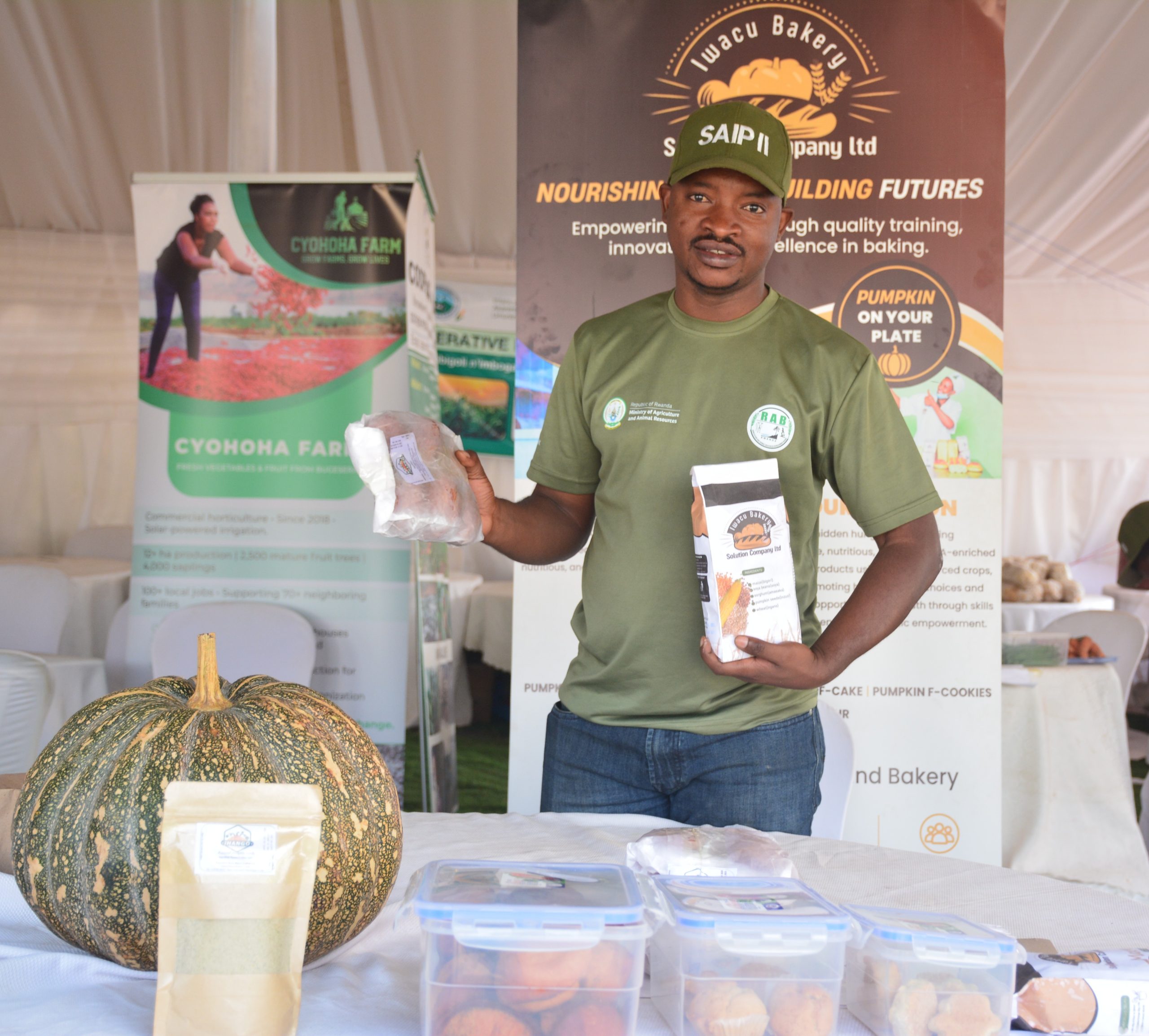
Valens Ruhorimbere, a Food Science and Technology graduate from the University of Rwanda, founded Iwacu Bakery Solutions Ltd after observing a persistent problem across local farming communities: large harvests of pumpkins going to waste due to a lack of commercial market value.
"I realized that pumpkins offered a real opportunity to add value to local farm yields while creating sustainable jobs for young people," Ruhorimbere explains. "It was a crop readily available in our fields, yet completely neglected as a viable commercial commodity."conditions, particularly diabetes linked to refined sugar and heavy wheat flour consumption.
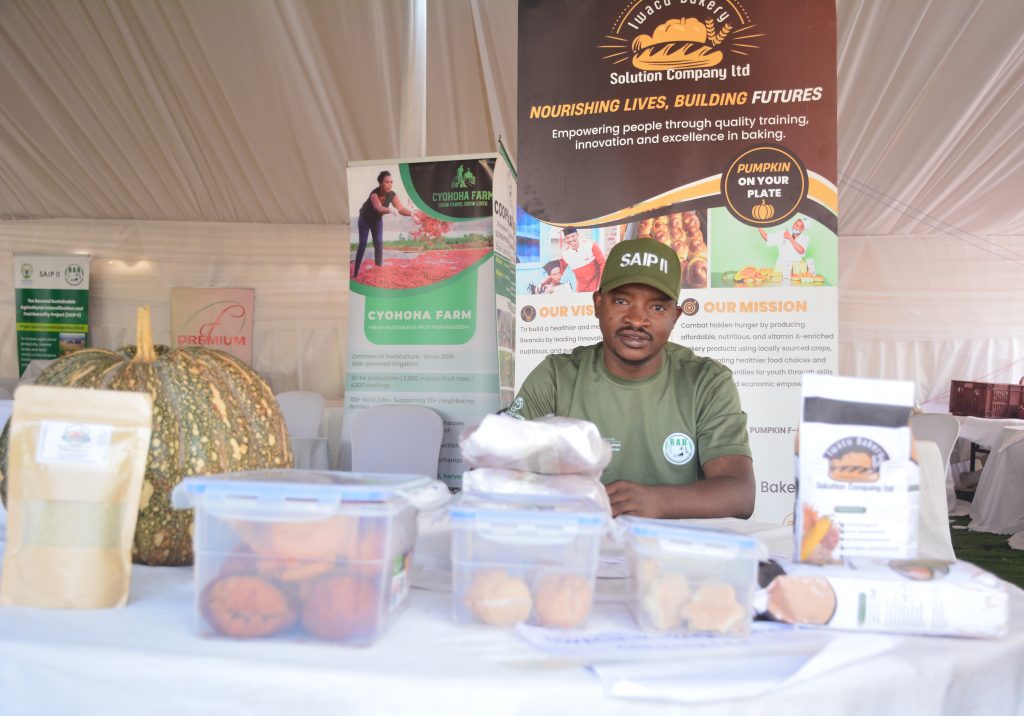
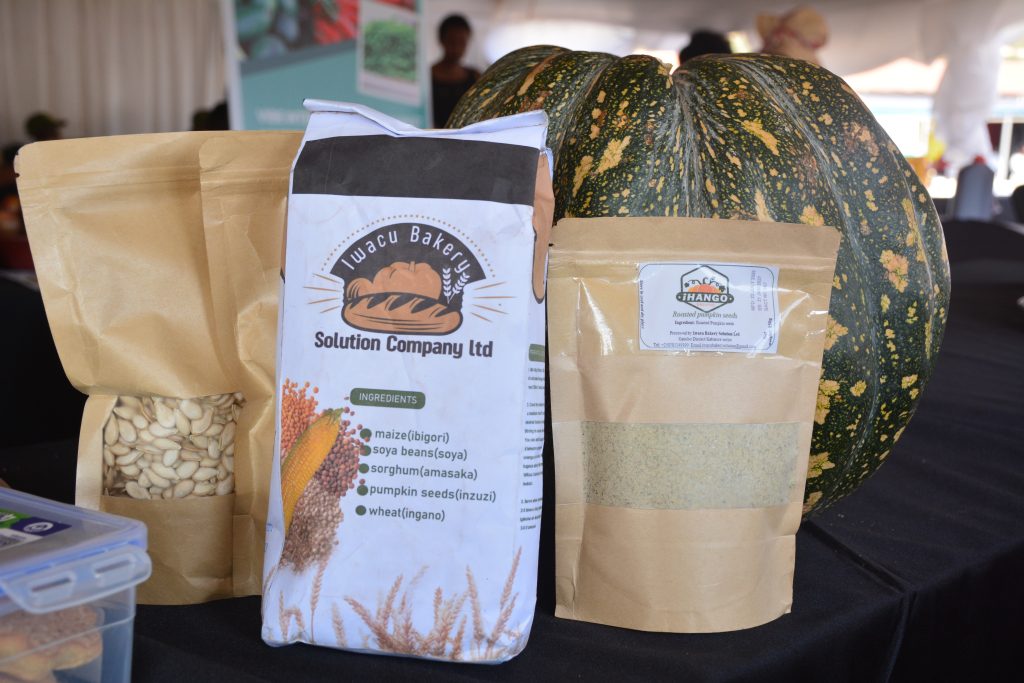
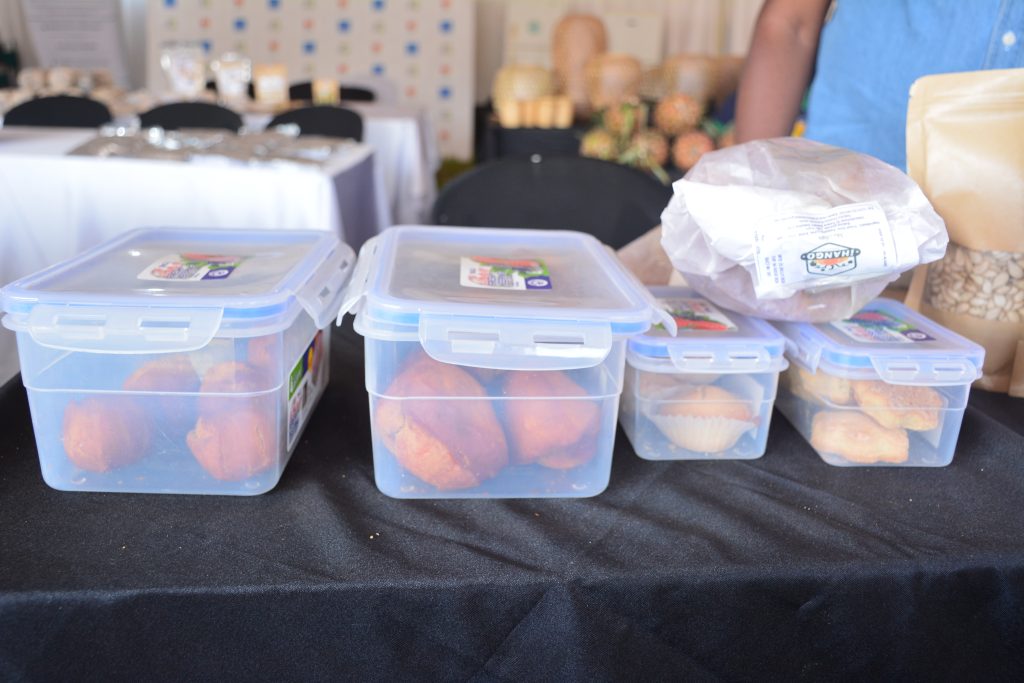
Utilizing his academic background, Ruhorimbere launched Iwacu Bakery Solutions Ltd, operating under the brand name IHANGO Maxima. The enterprise processes raw pumpkins into nutrient-dense bread, cakes, and specialty flour designed to promote better public health while reducing post-harvest losses for local farmers.
In its early stages, Iwacu Bakery Solutions operated with limited processing capacity due to inadequate equipment and traditional facilities. The major turning point came through financial assistance from the Sustainable Agricultural Intensification and Food Security Project (SAIP) via a Matching Grant.
The total grant project was valued at 101,239,532 RWF, where SAIP provided 70% of the funding and Ruhorimbere contributed the remaining 30%.
"Before receiving the SAIP Matching Grant, we lacked modern machinery and had low production capacity," Ruhorimbere states. "The funding enabled us to build a modern processing plant and acquire essential industrial machinery to scale up high-quality output."
Today, the investment has allowed Iwacu Bakery Solutions to directly employ 17 permanent staffand over 20 temporary workers, while serving as a reliable off-taker for local pumpkin growers.
Furthermore, the facility holds an official Food Operation License from Rwanda FDA and is in the final administrative phase of receiving the official RSB S-Mark quality certification after passing all laboratory tests.
Beyond the food processing side of things, the business also leans into social impact, kind of like that in collaboration with partners like UPHLS, the company has supported and trained around 120 young people in Gatsibo District where it is operating. Within that group there are 70 young women and 30 people living with disabilities, and yes everyone is picking up practical know how in baking, and also in pastry work.
Among those impacted is Eliezer Manirareba, a young man with a disability who reached out to the bakery seeking practical vocational training.
"Before arriving here, finding employment was extremely difficult for him because of social perceptions surrounding disability," Ruhorimbere shares. "After training him and offering him an opportunity, he demonstrated extraordinary capability. Today, he is one of our top-performing employees."
For Ruhorimbere, Manirareba's success reinforces the enterprise's ethos: "It showed me that 'Disability is not inability.' When people are given equal opportunities, they deliver remarkable results."
Gaining consumer trust for pumpkin-based bakery goods initially presented significant market resistance.
"In the beginning, one of our biggest challenges was convincing consumers that bakery products made from pumpkins were delicious, safe, and health-beneficial," Ruhorimbere recalls.
Through strategic collaborations with the Rwanda Youth in Agribusiness Forum (RYAF) and the Private Sector Federation (PSF), the company regularly participates in national exhibitions to host product tastings, build brand awareness, and refine its packaging.
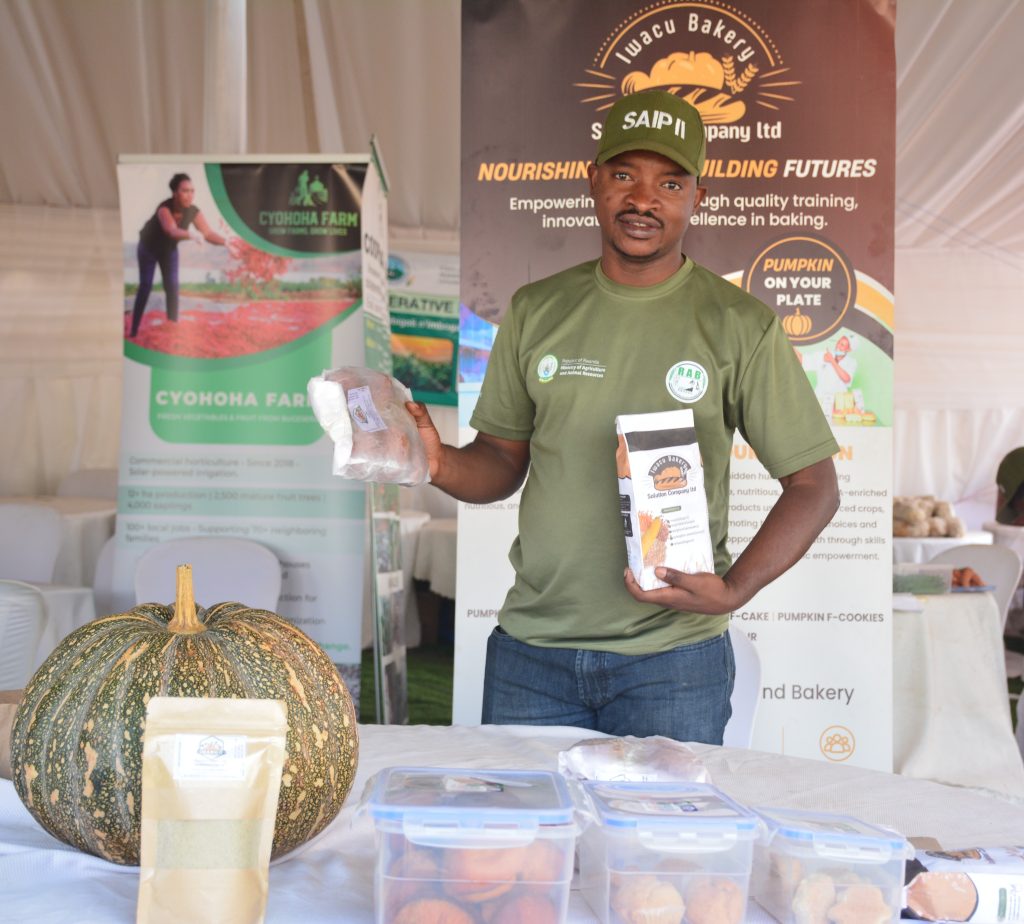
Encouraging aspiring young entrepreneurs to enter agribusiness, Ruhorimbere concludes: "Do not be afraid to start. Begin with what you have, solve a real community problem, stay purposeful, and keep learning. Funding and opportunities naturally follow a solid idea and persistent hard work."
Written by Jean Bernard MUKUNDENTE