
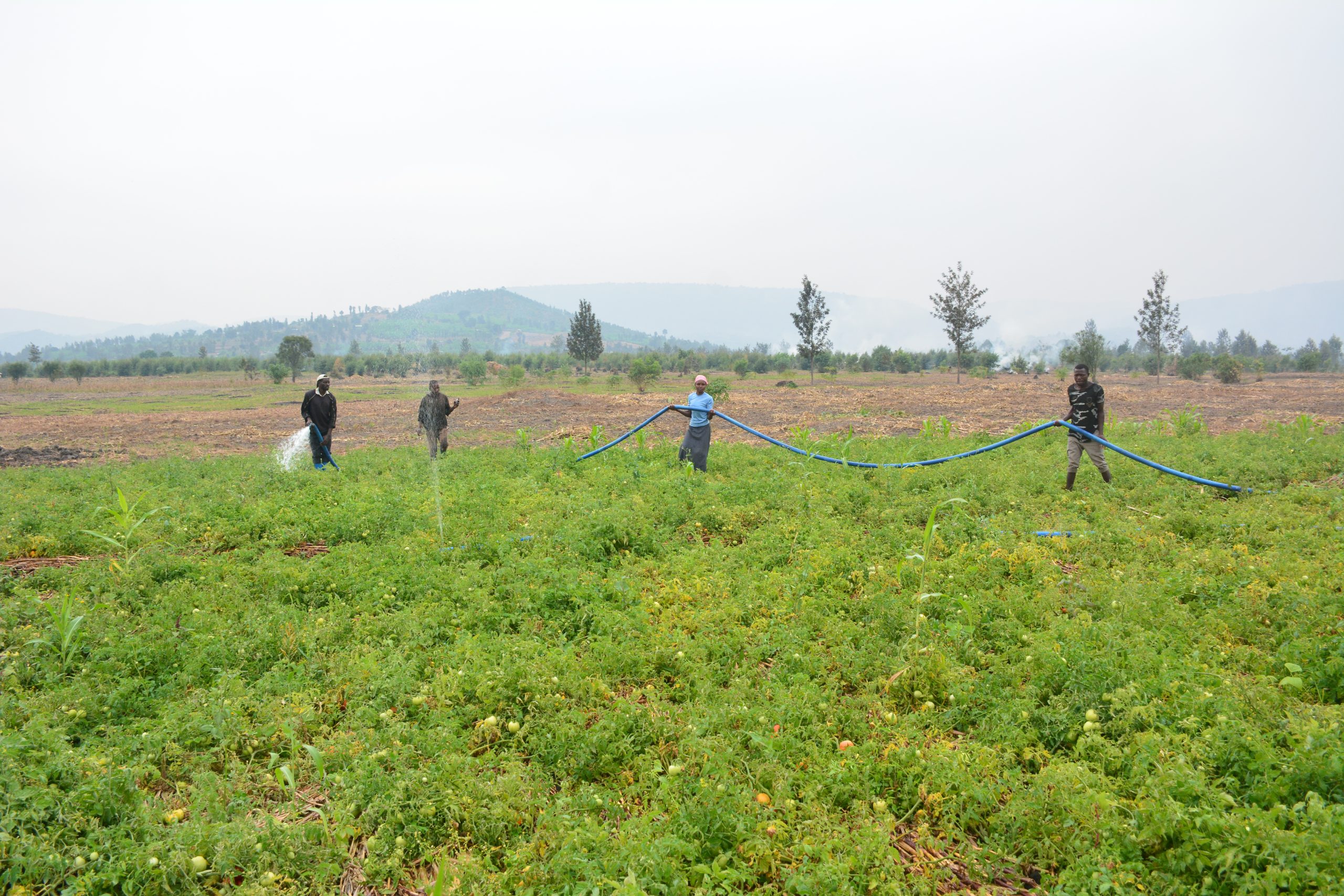
In the drylands of Nyagatare District in eastern Rwanda, keeping crops green during dry spells has long been a relentless battle for smallholder farmers. In Mimuli Sector, Biregeya Jean Paul spent years walking his half-hectare plot with a single manual watering can a slow, exhausting method that kept his cultivated land small and his harvests limited.
His situation changed after learning from a local agronomist about a government subsidy initiative under the Sustainable Agricultural Intensification and Food Security Project (SAIP II). After applying for the program, Mr Biregeya acquired a motorized water pump to irrigate his fields.
"Before receiving this motor pump, I farmed on 1/2 Ha using a watering can, generating 1,500,000 Frw. After getting the pump to irrigate my tomatoes, my earnings rose to 3,500,000 Frw," Mr Biregeya says.
Within 18 months of joining the initiative, his farm transitioned to continuous, year-round production of tomatoes and maize without depending on seasonal rainfall. With the extra income, he bought a family cow and purchased a house valued at 3.5 million Frw, while also renting out his irrigation equipment to help neighboring farmers protect their crops for a fee.
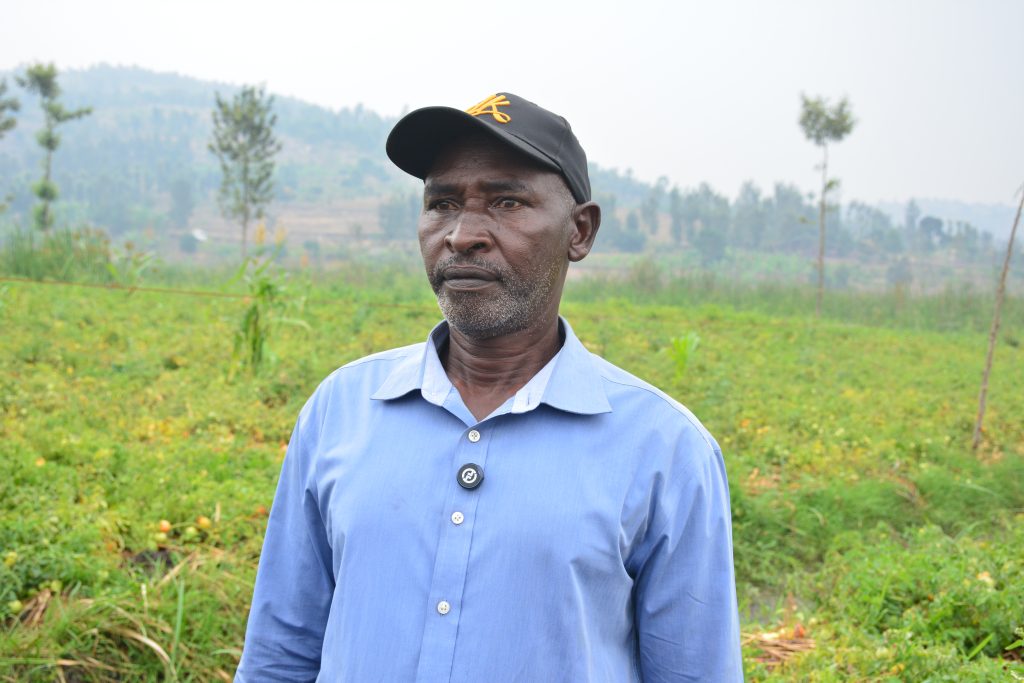
According to Innocent Nzabamwita, an irrigation specialist at the Rwanda Agriculture and Animal Resources Board’s Single Project Implementation Unit (RAB-SPIU), equipment choices are tailored to each farmer's land size, location, and preferred technology.
"The government subsidizes 50 percent of the cost of irrigation equipment for eligible farmers, while the farmer contributes the remaining 50 percent," Mr Nzabamwita says, noting that support increases for solar power. "For farmers cultivating between 5 and 10 hectares using solar-powered pumps, the farmer contributes 25 percent, while the government covers the remaining 75 percent."
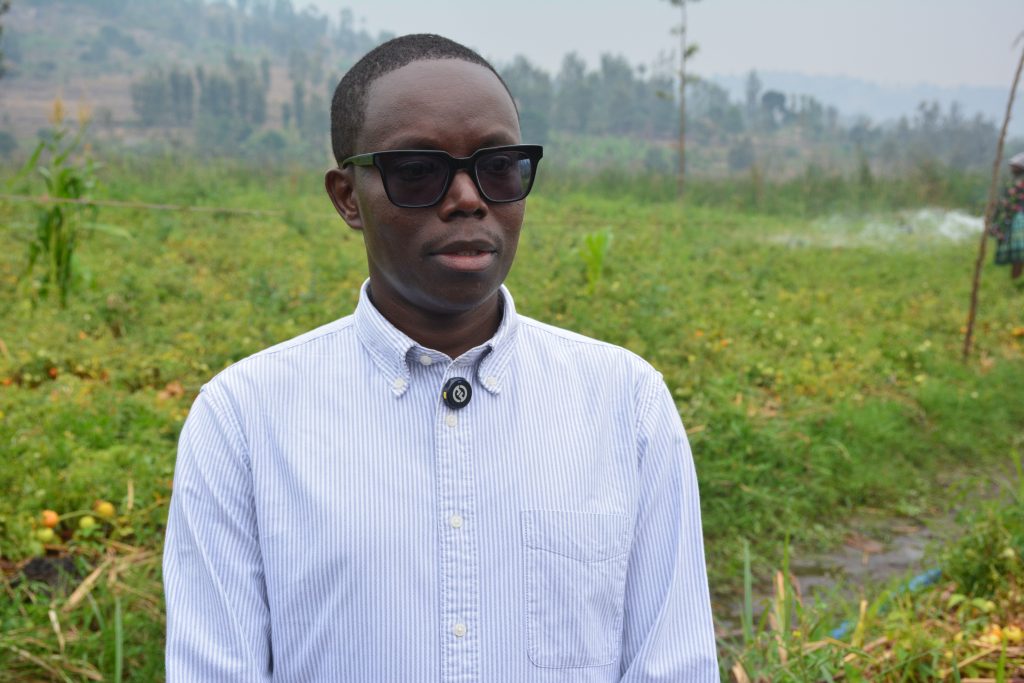
To qualify for the subsidy, farmers must own land near a reliable water source, meet their required share of the equipment cost, and participate through local farmer groups or cooperatives.
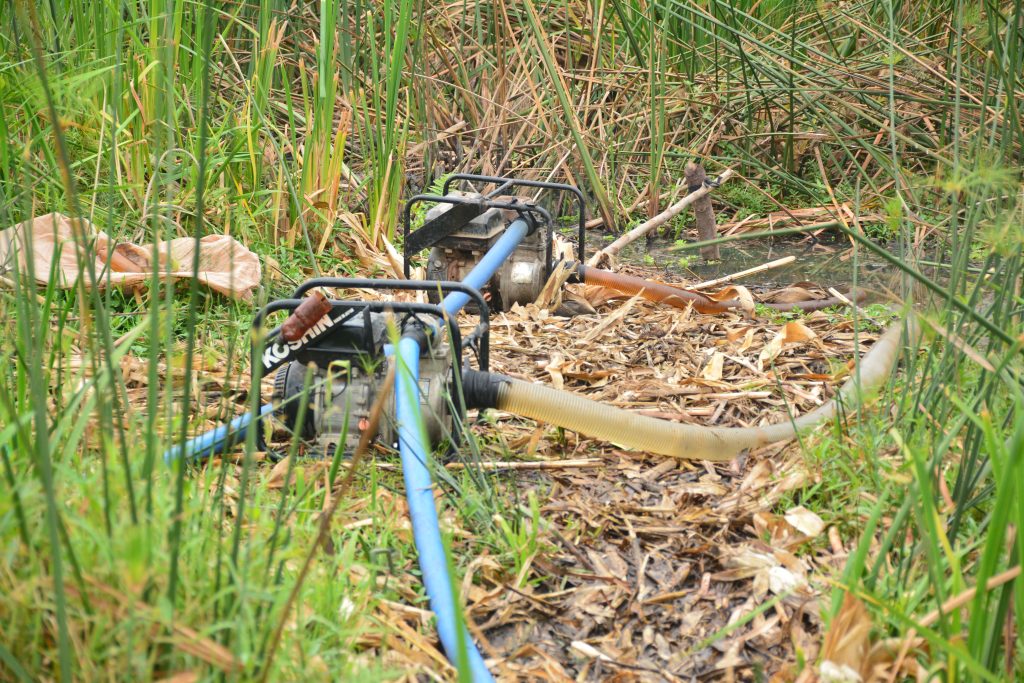
Through these measures, SAIP II has already brought 1,200 hectares under irrigation across 20 districts surpassing its target of 1,000 hectares and enabling smallholders to build resilience, boost yields, and supply commercial markets year-round.
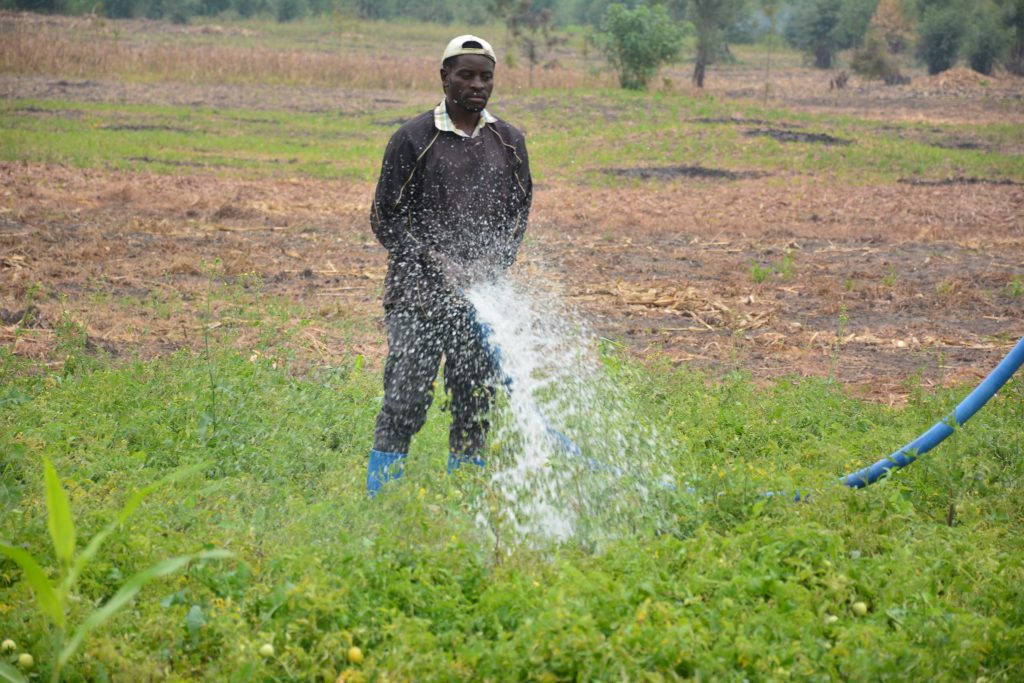
The government-backed SAIP initiative, funded by the Global Agriculture and Food Security Program through the World Bank, is executed under the Rwanda Agricultural and Animal Resources Board (RAB) through its Single Project Implementation Unit (RAB-SPIU). Its initial phase covered over 1,367 hectares across nine districts, reaching 3,369 beneficiaries, including 1,916 men and 1,453 women.
Written by Jean Bernard MUKUNDENTE