
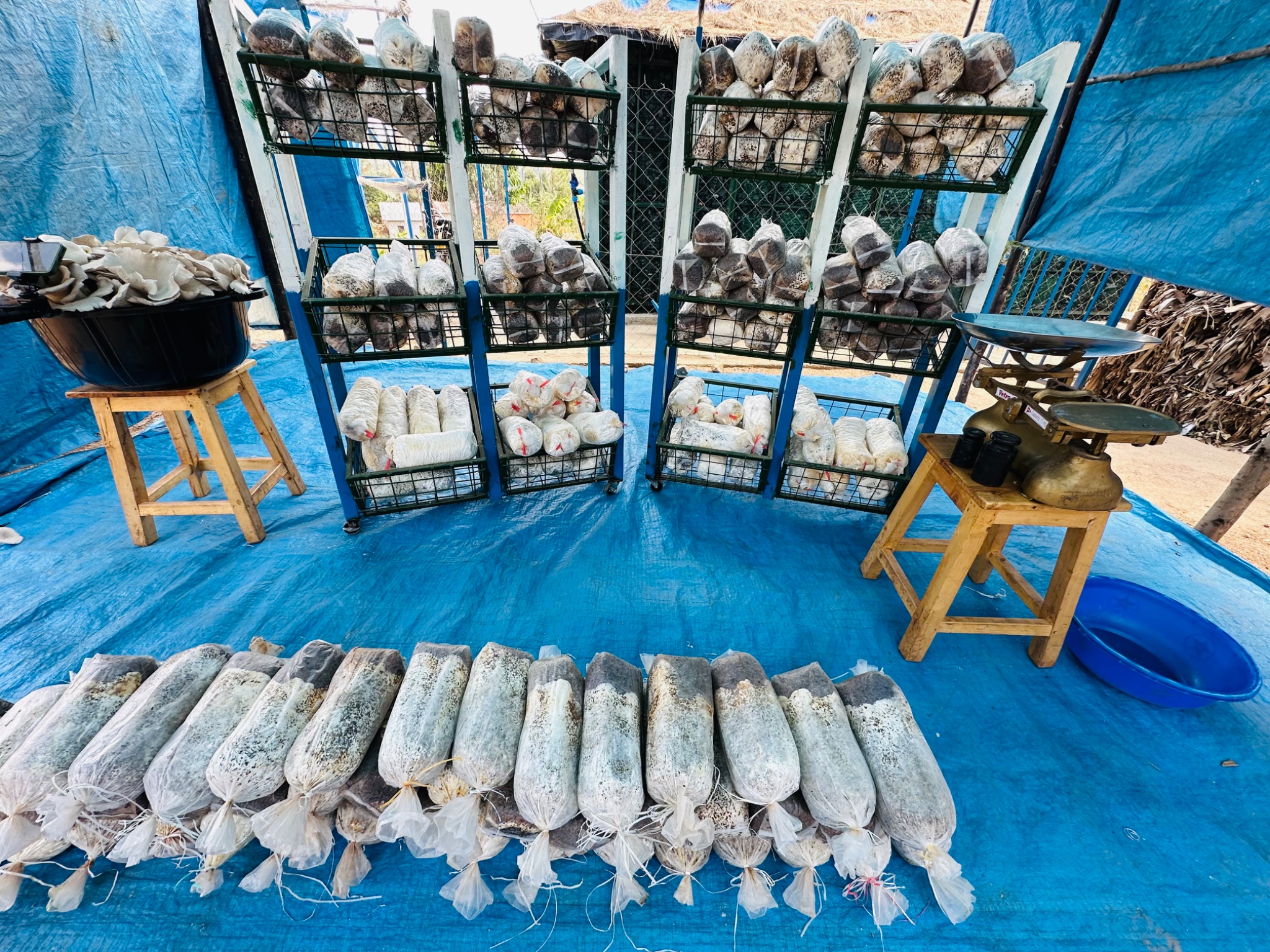
In Rwanda’s southern Nyamagabe District, a set of farmers is slowly moving mushrooms from a food that was introduced for family nourishment into something more like a small trade, you know. Members of the Vision Group, part of the KoiKwi Cooperative in Cyanika Sector, used to lean mostly on crops like beans, maize and vegetables; they say the harvest brought in too little to really lift their daily lives in a meaningful way.
All that started to shift after they joined a nutrition programme backed by Rwanda’s Sustainable Agricultural Intensification and Food Security Project (SAIP II). The project, carried out through the Rwanda Agriculture and Animal Resources Development Board (RAB), first gave vulnerable households mushroom-growing tubes and sessions on nutrition. But for some in the group, the support also sparked a kind of question, if we stop getting the tubes, why not learn to make them ourselves
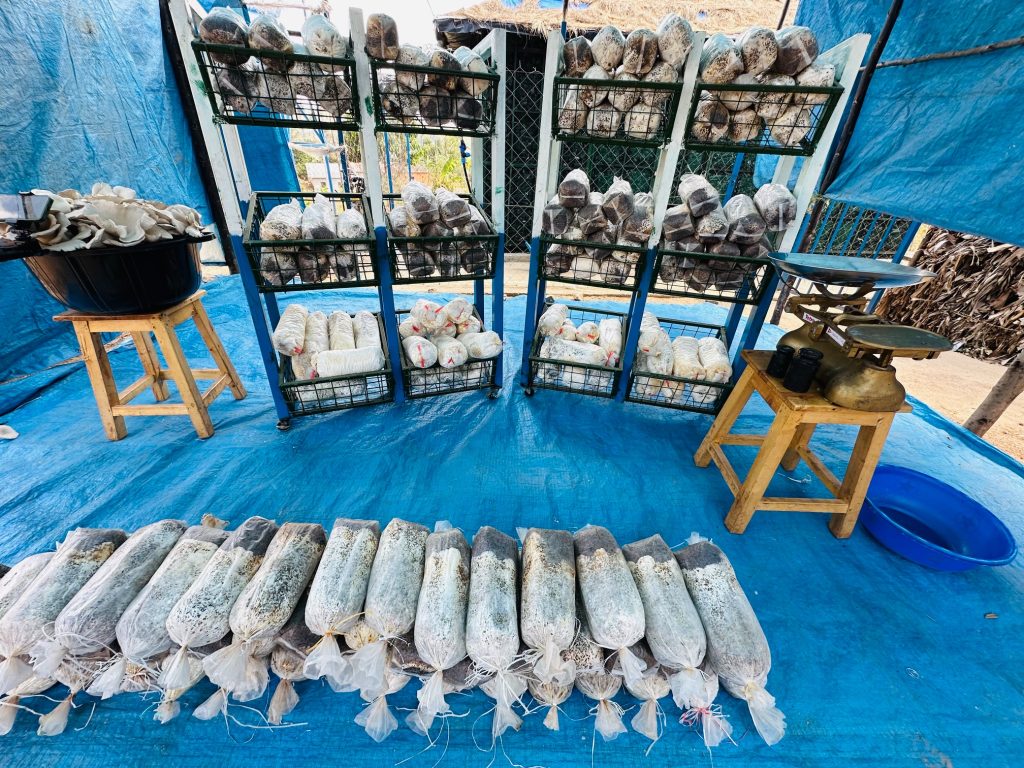
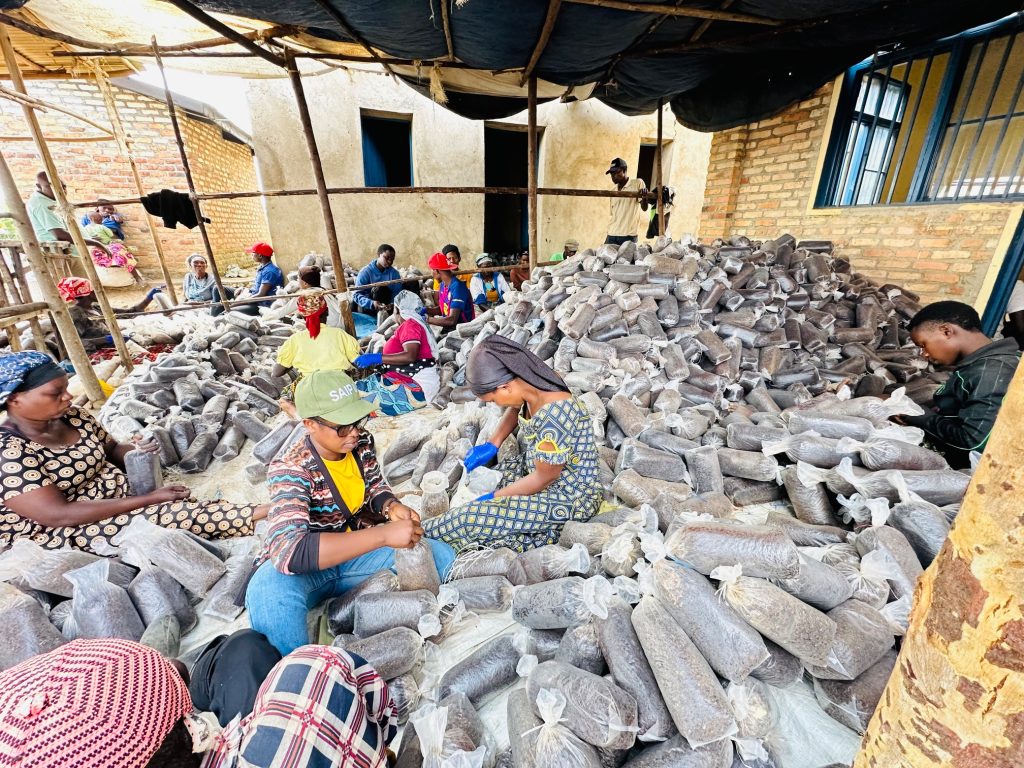
“We put in money to buy tools for producing mushroom-growing tubes,” says Imanishimwe Martha, the president of the Vision Group. “Since the SAIP II project had promised to purchase mushroom-growing tubes for us, we began with the first phase, where we produced mushroom-growing tubes and reached about two million tubes.”
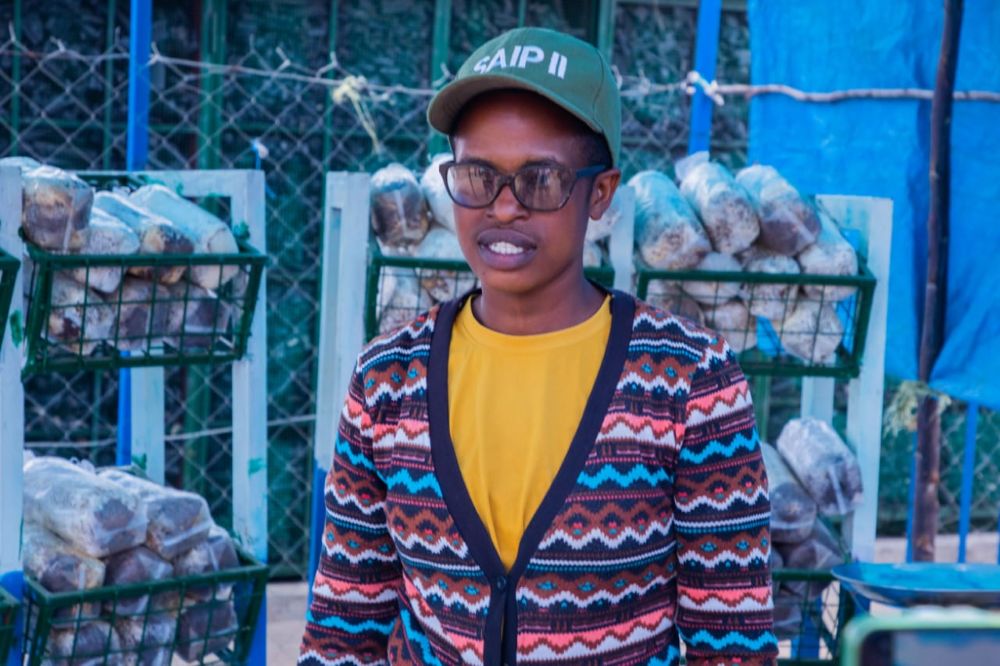
The group says it can now manufacture tubes for its own mushroom farms and also for other farmers who need them. For Nzeyimana Rora, a Vision Group member from Munyinya Village in Cyanika, the change is not just about meals but also about money. “Before, we did not know that mushrooms could help us respond to malnutrition and could also become a major business,” she says. “When SAIP II arrived, it brought training on controlling malnutrition through feeding children mushrooms. Up to now, we managed to turn that opening into a business. We now eat better and we earn money too.”
SAIP II rolled out its nutrition actions in 2024 in Nyamagabe, Ngororero and Gisagara districts. The programme targeted vulnerable households, including those with children under five, pregnant women and breastfeeding mothers. Mushrooms were included among the foods pushed through the programme, because of their nutritional value.
Imanimurinde Evode, a nutrition specialist with SAIP II, says the project initially distributed mushroom-growing tubes to around 2,000 households. “Mushrooms are among the good crops that carry nutrients and vitamins,” he says. “They help in fighting malnutrition in households and can also help people strengthen their livelihoods.”
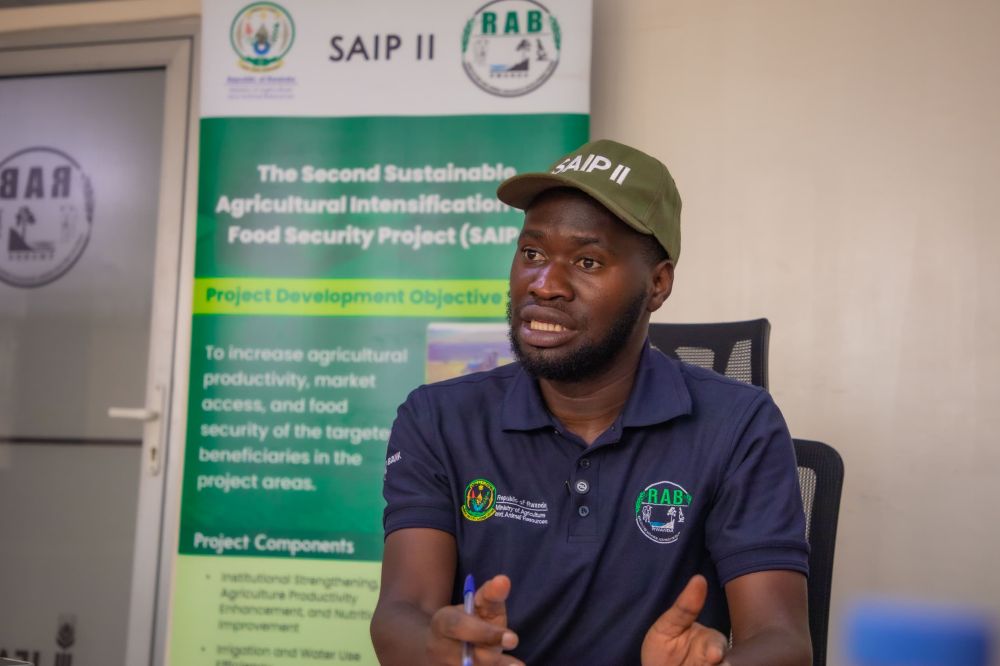
However, the method of the programme shifted after beneficiary groups suggested that they could produce the growing tubes themselves. “As a project, we accepted the idea from the people benefiting that we should provide training, so they could produce mushroom-growing tubes on their own,” Evode explains. “Instead of staying dependent on the project, they could also produce mushroom-growing tubes to sell to others who need them.”
Evode adds that groups working in each district under the programme have the capacity to produce roughly 10,000 mushroom-growing tubes. In Nyamagabe, the initiative has even helped create a local market for mushroom spawn made within the area. Project officials say SAIP II has so far bought more than 13,000 mushroom spawns from the Cyanika group. The group also claims it has received over 8 million Rwandan francs ( $5,500 ) in payments since the programme started.
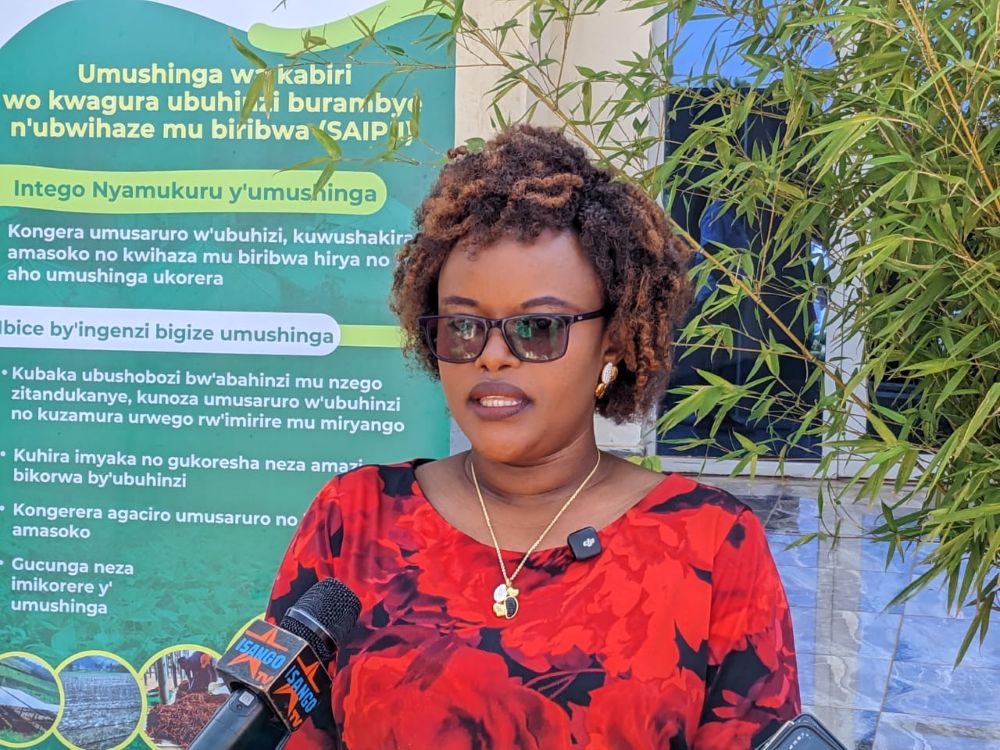
For local authorities, moving from receiving support to building a productive activity is a key part of the intervention. Uwamariya Agnes, Nyamagabe’s Vice Mayor in charge of Social Affairs, says the project supported the district to push household-level efforts against malnutrition. She notes that beneficiaries were trained on ways they could improve nutrition inside their own homes, especially for children under five and pregnant women. She also says the training gave some beneficiaries the ability they needed to start producing mushroom-growing tubes themselves.
For the Vision Group, this whole experience shows how a nutrition intervention can take a more surprising path than expected. What began as a push to place more nutritious food on the tables of vulnerable families has grown into an activity that brings both food and income, sort of. Still, what happens in the long run will depend on whether it can keep finding buyers for its mushroom-growing tubes after the project support ends.
District data from the Demographic and Health Survey (DHS) shows that the proportion of children under five affected by stunting fell from 33.6% in 2020 to 29.4% in 2025.