
In the green highlands of western Rwanda, where tea gardens roll across misty hills and smallholder farmers move between fields, collection centers, there is a quiet digital change kind of slipping in and reshaping how agricultural life is arranged.
At the center of it, there is a system that at first glance feels more like banking software than a farming innovation. Yet for farmers, cooperative leaders and buyers, COPA Technology is becoming something more hands-on: a daily operating structure for agriculture
Developed by Extra Technology Ltd, a Nyamasheke-based company founded by MUHIZA Frank, COPA is being framed as a bridge between rural production and that world that is more and more data-driven, finance, markets, and cooperative management

The concept is simple on paper, but ambitious in practice: gather together the scattered cooperative routines production records, payments, loans, insurance, savings, and communication into one digital platform that basically follows the farmer from field work to final payout
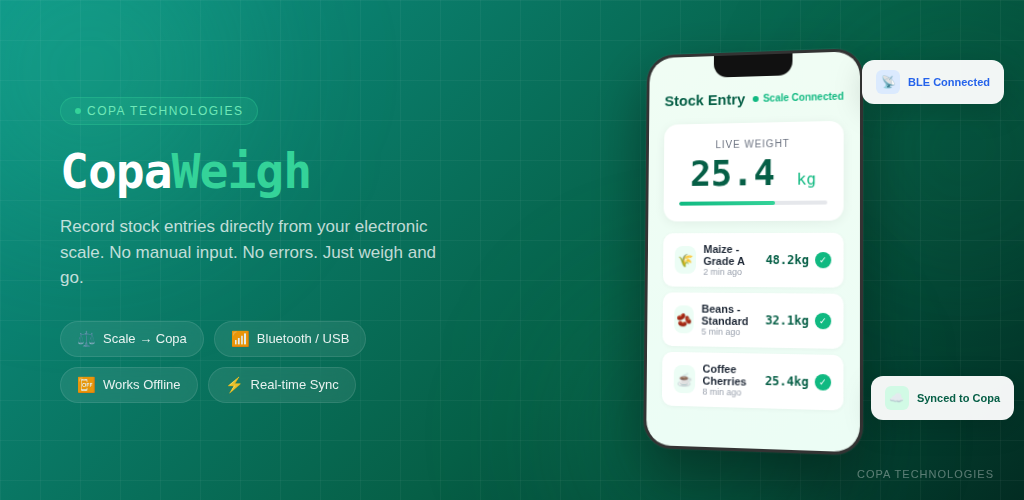
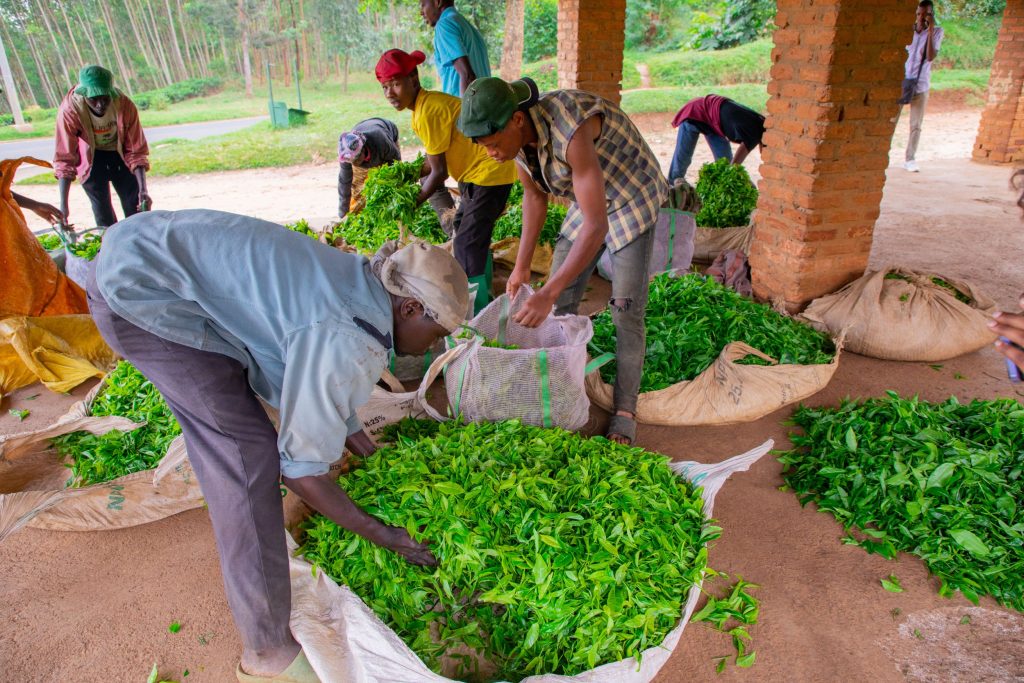
In real life, it means that when a farmer brings tea leaves or rice to a collection center, they no longer feed the data into a paper ledger that can drag, delay, or create disputes. Instead, the transaction is captured digitally, weighed through integrated smart systems, and immediately logged in a shared database that cooperative manager, banks, and even the farmer can consult.
For many people inside Rwanda’s cooperative sector, this signals a shift away from years of manual accounting and periodic reconciliations that often-left space for disagreement.
“Today, farmers use the system to request and repay loans smoothly because the cooperative production information is already verified,” says MUHIZA Frank, explaining how COPA is changing the way farmers relate to financial institutions. “A farmer can receive money directly on their phone without having to stand in line at the bank, and deductions are handled gradually for loans, insurance, Ejo Heza, and savings.”
What makes COPA more than a record-keeping gadget is how it tries to push financial discipline directly inside the transaction flow. When a cooperative processes a farmer’s payment, the system automatically subtracts loan repayments, insurance contributions, pension savings like Ejo Heza, and other agreed duties first, then the remaining amount reaches the farmer.
So, it is a model that moves financial management from personal discretion to rules enforced by the system , which reduces fights, but also tightens accountability across the value chain.
Inside cooperatives such as KOBUTEVIGI, the difference is not some abstract idea. It shows up at weighing points, where digital integration replaces written logbooks and quick calculators. Staff members say that what used to take hours of reconciliation now happens in real time.

“Before COPA, weighing was done manually using paper records, which was time-consuming and often led to data loss,” says UWIRAGIYE Marine, who works at a tea weighing station. “Now farmers arrive with produce, and right after weighing, they know the exact quantity and the value of what they brought.”
For farmers, the biggest immediate difference is trust, or maybe the gradual rebuilding of it.
In talks at collection spots, older farmers remember disputes about weights and delayed payments that were once pretty common in paper-based setups. One farmer, NYIRAHABINEZA Francine, says those tensions shaped everyday routines in a way outsiders rarely noticed.
“Before COPA, we faced unfair weighing because everything was recorded on paper, which usually created conflicts between farmers and buyers,” she says . “Some people even lost money due to dishonesty. But now, COPA has fixed those problems because everything is recorded in the system.”
Past the weighing station, COPA’s influence stretches into financial institutions, where cooperative data is increasingly treated as a credit history type of reference. By digitizing production records, the system gives banks a cleaner picture of a farmer’s output, repayment behavior, and cooperative involvement
information that was often hard to confirm in rural settings.
That gradual shift is quietly widening access to credit, especially in places where collateral has long been the main wall.
COPA’s progress has also been supported through Rwanda’s broader agricultural innovation push, including backing from the CDAT project via the Innovation Challenge Fund. That support helped expand the platform’s integration with banking systems and strengthened its role as a multi-sector instrument across agriculture, livestock, fisheries, and transport.
What is emerging is not only a digital tool for cooperatives, but an effort to rewire how agricultural value chain’s function connecting production data, financial services, and market systems into one continuous loop.
Still, the transformation stays incremental, not instant. Many cooperatives keep a mix of digital routines and traditional practices, and adoption differs by region and infrastructure. Yet the direction is getting clearer: data is becoming as important as the crops themselves.
For Extra Technology Ltd , the longer-term vision is to normalize this shift so that a farmer’s economic identity is no longer anchored in scattered paper pages, but in a continuous digital trail that follows each harvest, each loan, and each payment.
In Rwanda’s evolving agricultural economy, the idea is starting to take root: farming tomorrow may depend not only on what grows in the soil, but also on how accurately it is captured in data.