
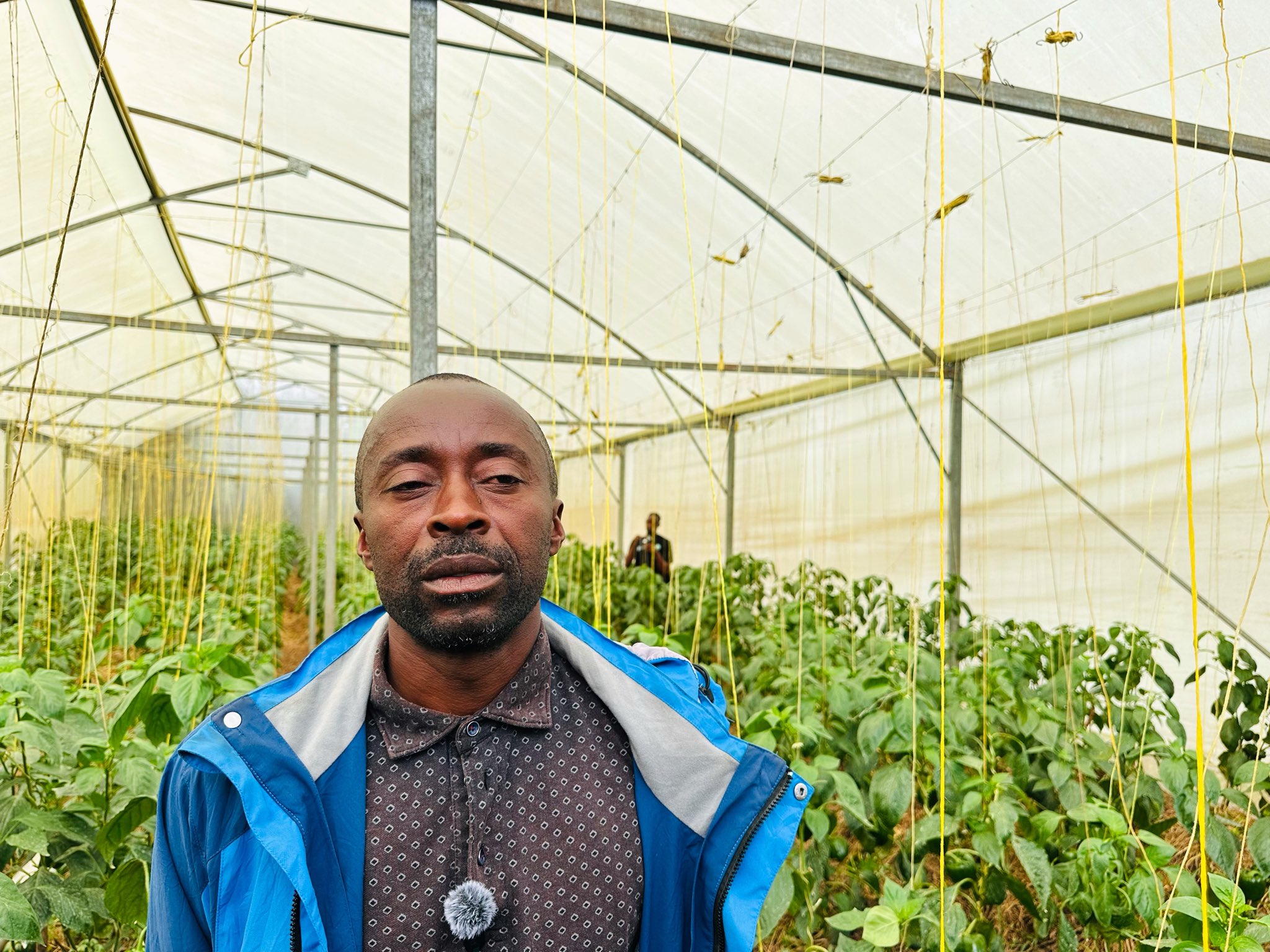
Karongi District, Jean Paul Kubwimana , a commercial vegetable farmer from Rubengera Sector, says has become central to protecting his investment after experiencing significant financial losses in the past.
Kubwimana works with two modern greenhouses, they have irrigation systems and the whole infrastructure needed for vegetables all year. One greenhouse alone runs 240 square meters, so he manages things in a more organized, and measurable way.
He invested in land preparation, irrigation upgrades, and crop management, building what he describes as a routine meant for stable production plus a reliable flow to the market.
Still, greenhouse farming is not only smooth. There are risks, and sometimes they come fast.
So when he recognized these weak spots, he enrolled the greenhouses in the Government’s agricultural insurance plan, Tekana Urishingiwe Muhinzi Mworozi. This initiative, is introduced under the National Agricultural Insurance Scheme (NAIS).
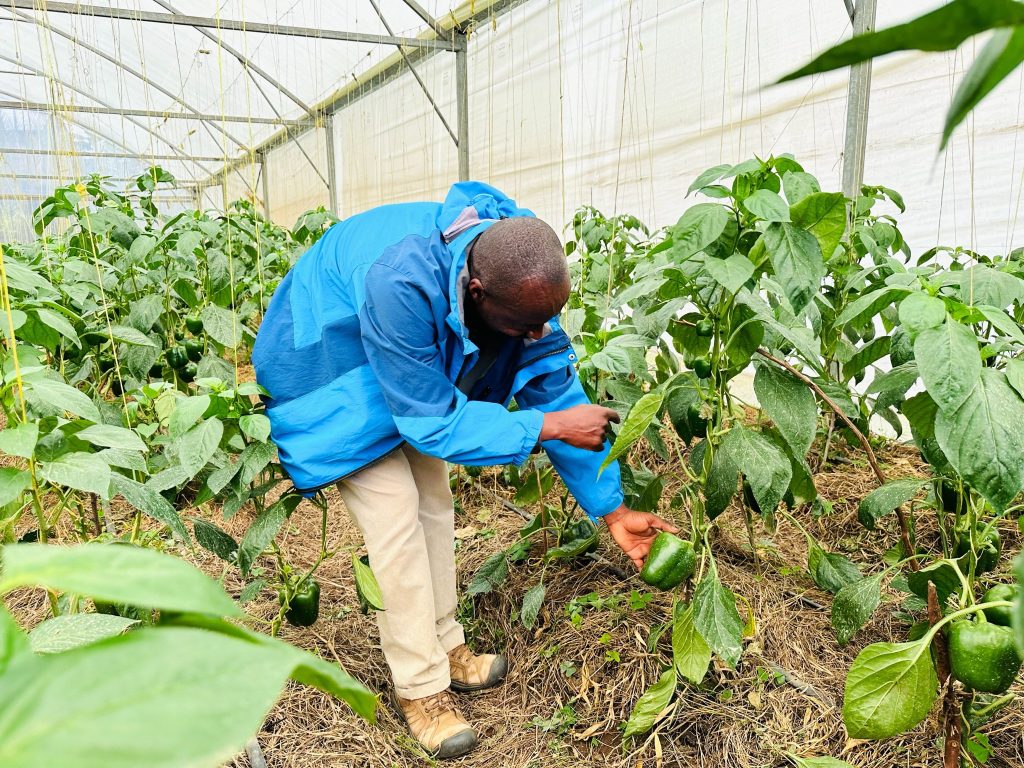
The insurance product was designed with greenhouse risks in mind, like damage to structures and irrigation systems, issues affecting crops, and also losses that can happen during transport to markets.
Kubwimana explains his choice was pushed by what happened before.
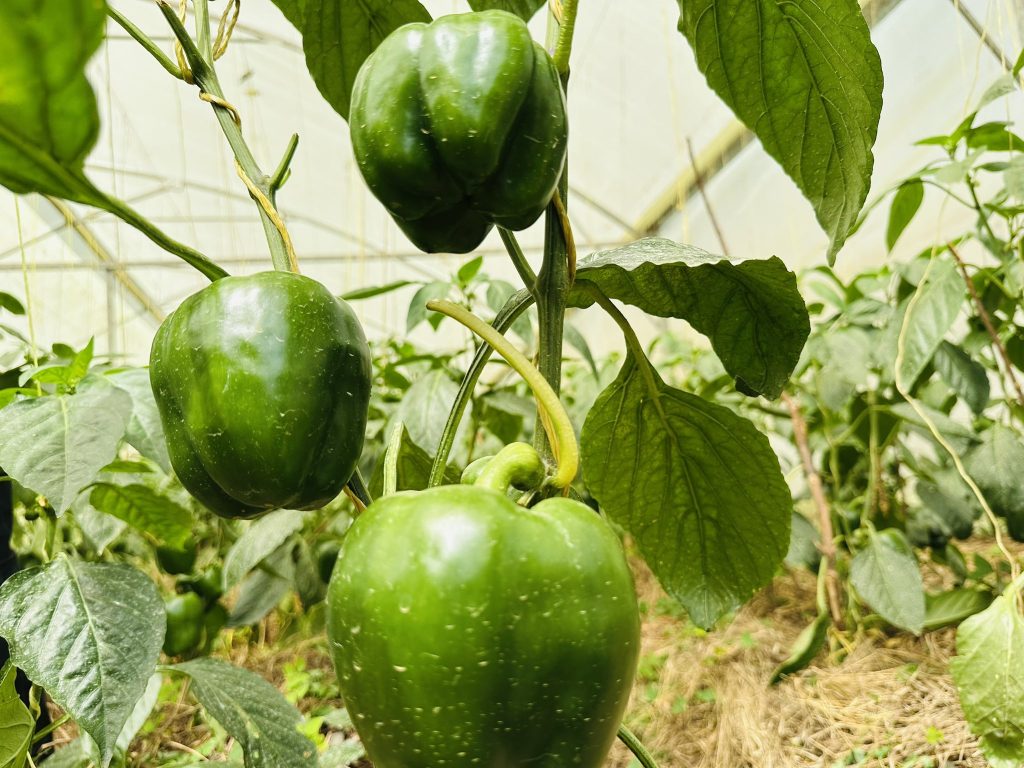
“Earlier, before I joined agricultural insurance, I lost close to RWF 2 million, when strong winds destroyed my greenhouse and also damaged my bell pepper crops,” he said.
He added that the event basically showed him how fragile the finances can be, when you invest in modern farming.
With the current arrangement, the Government pays 40 percent of the insurance premium, while farmers cover the remaining 60 percent , which makes the policy more reachable than previous options where farmers had to pay the full amount.
“Right now, knowing that my greenhouse is insured gives me morale to continue investing,” Kubwimana said. “I can concentrate on production, without always fearing that I will lose everything.”
In Karongi District, greenhouse farming is growing, because more farmers are turning to protected cultivation to raise productivity, and also keep supplying consistent, high-quality vegetables to nearby markets.
During an awareness campaign held on May 29, 2026, farmers, livestock keepers, and other stakeholders were asked to enroll in agricultural insurance products, so their investments are better protected.
The campaign shared details about the available insurance choices, and it also stressed the insurance role in building resilience against climate-related threats and other unexpected setbacks.
For farmers like Kubwimana, insurance seems less like an optional add-on, and more like a normal part of running modern agricultural projects.
His story shows a gradual change: more farmers are putting money into production while also looking for ways to reduce the shock when financial problems hit.