
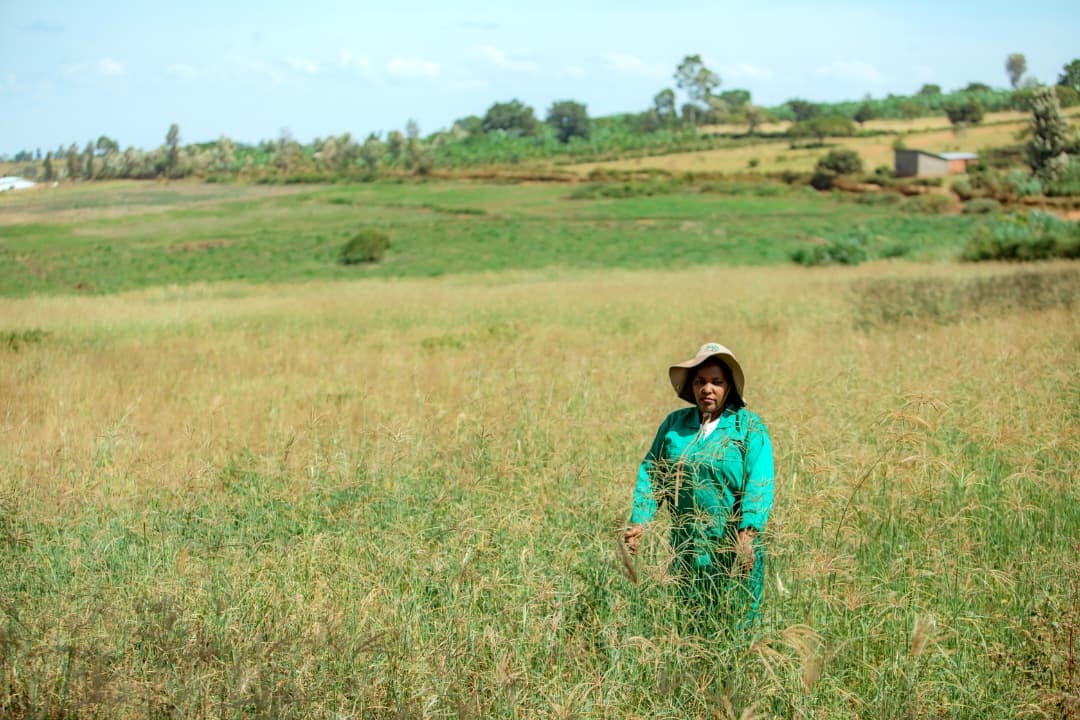
In Nyawera Sector,Kayonza District in Eastern province of Rwanda, what started off as a kind of routine agricultural training, under a national dairy programme, sort of drifted into a different direction. Like, now it’s a whole thing about entrepreneurship, income creation, and a newly built home, which is worth around RWF 50 million.
Jacqueline Murekatete used to be a casual laborer, earning roughly RWF 20,000 a day. These days she works as a Farmer Field Facilitator, under the Rwanda Dairy Development Project (RDDP) an initiative run by the Rwanda Agriculture and Animal Resources Development Board (RAB), with support from the Government of Rwanda and the International Fund for Agricultural Development (IFAD). She is also, in practice, one of the local suppliers of fodder seeds in the area.
Her change didn’t happen overnight, it began once she was chosen to attend training under RDDP. There she gained technical lessons in fodder production, seed multiplication, harvesting ways, and feed conservation practices, all in one package.
But for her, it wasn’t only about learning crops, it was also the chance she noticed in the background.
“I realized there was a growing demand for fodder and quality seeds among dairy farmers,” she said. “So instead of treating it, like, only training, I saw it as the beginning of a business.”
She started modestly, buying fodder seeds, multiplying them, and then selling or supplying them to dairy farmers in her community. Over time, her work took a more steady shape. She became involved in supplying seeds such as Mucuna and Chloris gayana, plus she kept giving hands-on guidance to farmers, from planting to harvesting and even baling fodder.
“I train farmers on how to set up fodder plots , manage harvesting, and prepare fodder for storage. Good feed is the base of productive dairy farming,” she explained.
While she was doing the training side of things, Murekatete also built an agribusiness that kept growing around fodder seed supply. She says her activities have generated about RWF 8.5 million in earnings. That figure, according to her, marks a huge shift from her old daily wage work.
With that income, she says, she was able to put together a modern house, valued at roughly RWF 50 million.

Even though RDDP was created to boost dairy productivity by improving access to quality fodder, Murekatete’s experience shows a different but connected result too: the rise of local entrepreneurs inside the dairy value chain.
She notes that demand for fodder still increases, especially as more farmers adopt improved dairy breeds and more modern livestock practices. Yet the supply is still not enough to match what farmers need.
“There are many dairy farmers looking for quality fodder , and demand remains far higher than supply. We are producing more, but the market keeps expanding,” she said.
Murekatete also views the entry of new fodder businesses in Nyawera as a good sign. In her view, it will reduce shortages and help the dairy sector keep growing.
For her, fodder production is no longer just a training output or a side activity. It has become a business model, one that shifted her livelihood and, quite literally, built a home.