
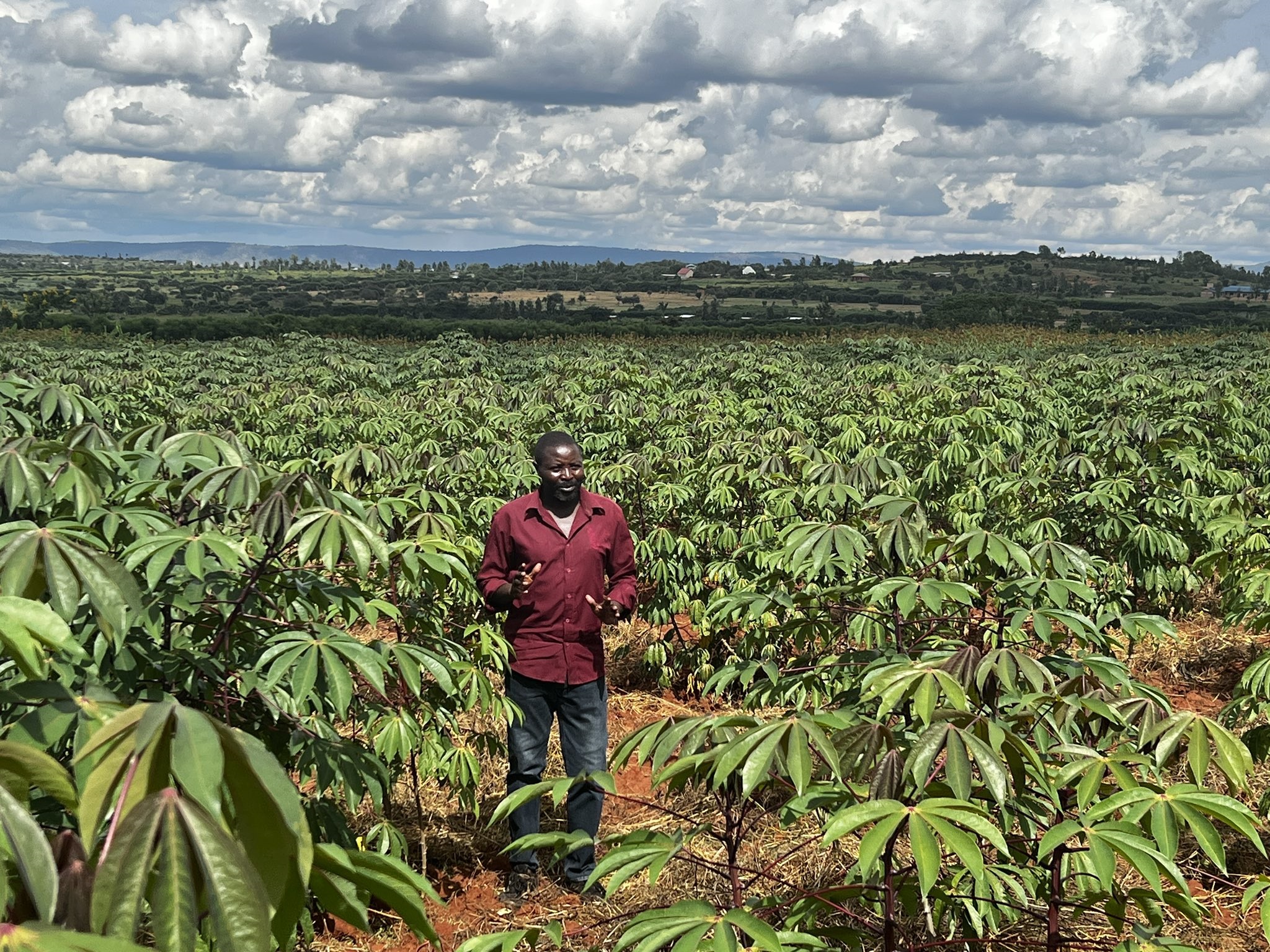
KAYONZA, RWANDA, In the Ndego sector, cassava no longer represents a marginal crop only cultivated during adverse weather. It is now established as an important commodity crop that provides farmers with a sustainable livelihood, helps to secure household food supply, and offers access to the formal sector.
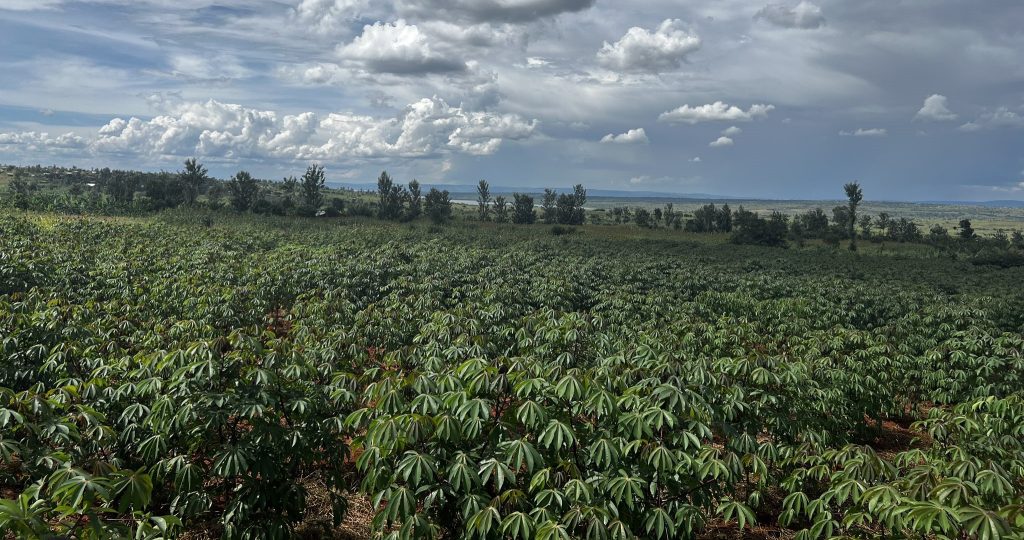
The evidence of this evolution is becoming clearer among the beneficiary farmers participating in the Kayonza Irrigation and Integrated Watershed Management Project phase II (KIIWP2). Maridadi Jean de Dieu, who is both a cassava farmer and a Farmer Field School facilitator, farms on nearly three hectares, while producing improved planting material of cassava for the local farmers. “Through RAB, I got improved cassava cuttings and I help other farmers to have the planting materials.” He said.
Jean de Dieu revealed that through the KIIWP2 support the project has done more than distribution of planting materials; it has also provided fertilizers and a follow-up support, accompanied by trainings. Based on the results, Jean de Dieu estimates his harvest to be no less than 15 tonnes per hectare, and he already signed an agreement with Kinazi Cassava Factory to buy all the product from him. “In a year, I can get no less than 5 million francs only from cassava farming.”
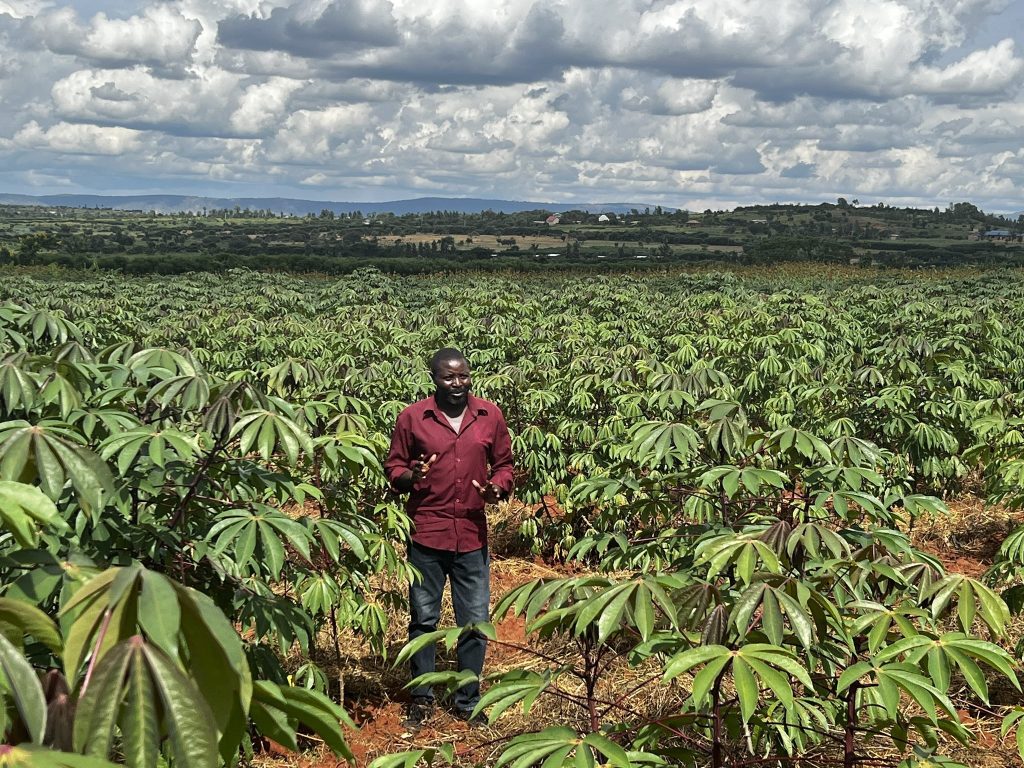
The crop's success relies in its ability to withstand extended sunshine more successfully than others in the area. Local farmers prefer it because improved varieties such as Gikungu and Buryohe have better resilience and are more robust. “With the trainings and support of KIIWP2, I am able to harvest 40kg per cassava plant.” Jean de Dieu indicated.
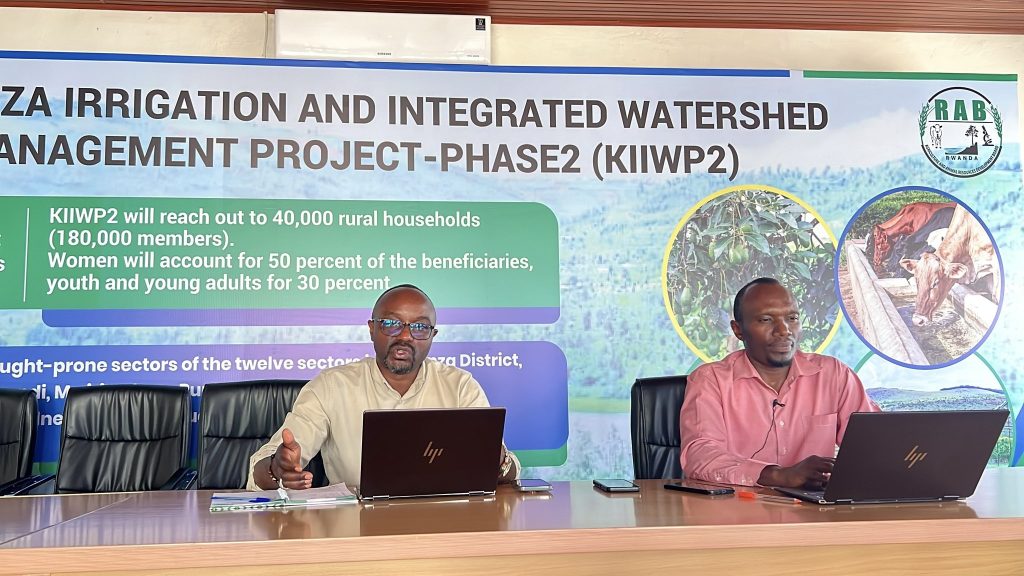
The project coordinator links the successful results to integrated investments in soil protection, water control, and capacity building activities implemented.Faida Olivier, the Monitoring and Evaluation Specialist of KIIWP2, stated that already thousands of hectares of land are under soil erosion protection, but the expansion of irrigation remains an important challenge in sectors such as Ndego.
The Agricultural Extension Specialist, Sibomana Jean Claude, informed that after different cassava varieties were tested, only KIIWP2 beneficiaries adapted the growing of cassava in the area after RAB suggested it as a feasible crop for the environment, and millions of cuttings were disseminated. The local people now have food security in their households and market outlets as well; food shortage is becoming part of their history.
Though the farmers mention prolonged drought still remains a challenge, KIIWP2 plans to increase the irrigation coverage in Ndego sector in the coming future. All the achievements witnessed in this local community are part of the large context of cassava farming which is now viewed not as just a subsistence crop, but a lucrative cash crop.
Written by Jean Bernard MUKUNDENTE