
MUSANZE, Rwanda for years, Augustine Maniriho sold his potato harvest the only way he knew how: waiting for informal traders to arrive at his farm in northern Rwanda, haggling over prices, and then watching buyers decide the worth of his crop just by looking at it.
"We had little said over the price," Maniriho said, sorting potatoes at a collection point in Musanze District. "Buyers defined the quality themselves and many of us felt we were losing money."
In Rwanda, where agriculture employs over half the workforce, potatoes are a critical staple and cash crop especially in the fertile northern highlands. Still, smallholder growers have long battled against highly volatile market information, a heavy reliance on predatory middlemen, grading fights that never really end, and post-harvest losses that can be brutal.

Now a local agribusiness, Murika Farms Ltd, is trying to change that story through a tech-driven ecosystem that trades guesswork for data, kind of quietly but insistently.
Backed by a matching grant from the Innovation Challenge Fund (ICF) under the World Bank-funded Commercialization and De-Risking for Agricultural Transformation (CDAT) project, managed by the Rwanda Agriculture and Animal Resources Development Board (RAB), the company has rolled out a two-part solution: a digital marketplace and mechanical grading technology.
The partnership totals RWF 134 million in investment, with Murika Farms putting in 30 percent of the cost. Money like that has supported the Murika App, and the deployment of five mechanical potato grading machines. Instead of subjective talks, the machines sort potatoes into standardized quality buckets before anything reaches the market.

"Before, conversations about quality often ended in disputes," said Byiringiro Sad, Tech Lead at Murika Farms. "When grading is standardized, there’s more transparency, and farmers can negotiate from a stronger position. "
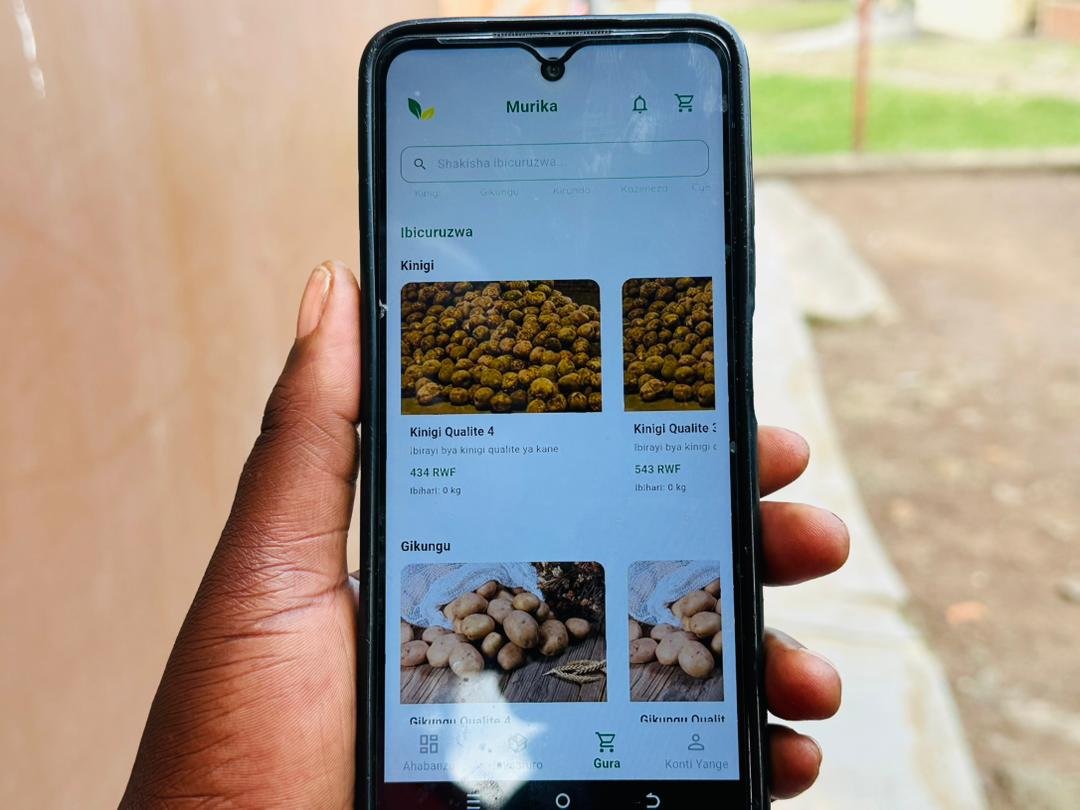
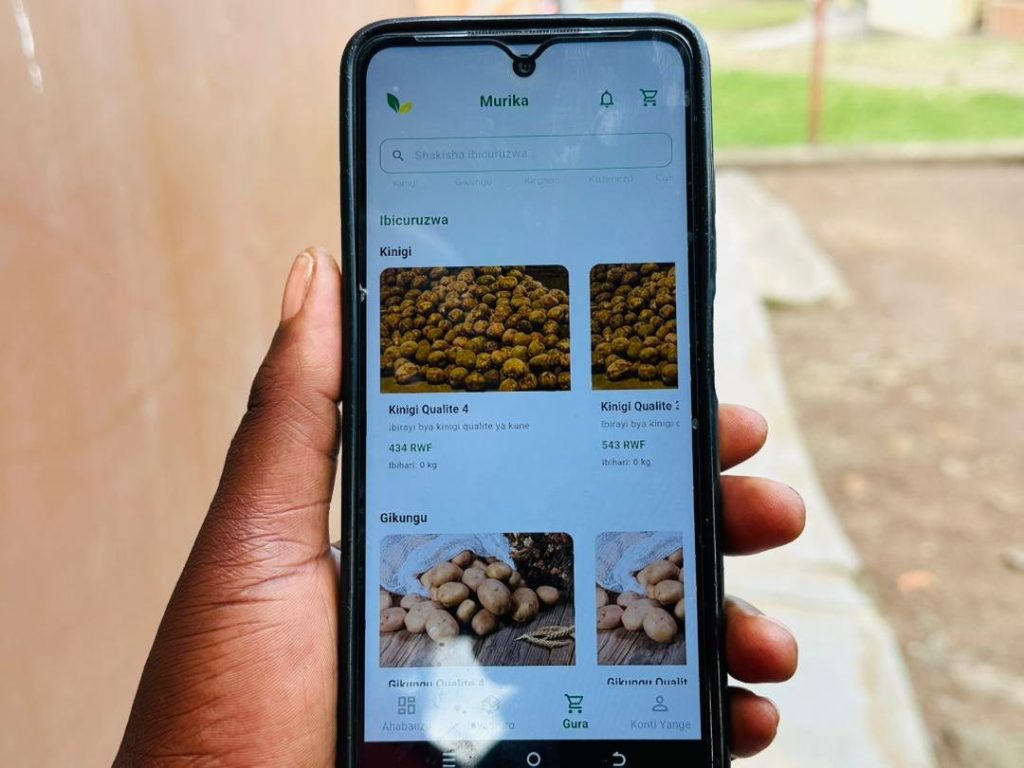
After potatoes are categorized, the produce is listed on the Murika App, where buyers can check verified quality signals, available volumes, real-time demand, and fixed prices. The platform also ties in digital payment processing and Electronic Billing Machine (EBM) tax generation, helping formalize transactions that used to be mostly cash-based. And to close the supply loop, Murika Farms coordinates logistics and transport so the produce can land directly in urban centers.
Headquartered at the Musanze Hanga Hub, Murika Farms has expanded its digital footprint to Rubavu, Nyabihu, Burera, and Kigali. Its database now includes over 6,000 farmers and livestock producers across 11 cooperatives. Importantly, women make up 54 percent of the participating farmers, a clear nod to gender inclusion inside the regional agricultural value chain.

The numbers are telling. Total transaction volume enabled through the Murika App has surpassed RWF 230 million so far, and it has driven an average income gain of 18 percent for participating farmers. At the same time, agricultural productivity among active users rose by 15 percent, while post-harvest losses fell by 13 percent thanks to optimized logistics and faster sales.
Beyond farm results, the enterprise has created 45 off-farm jobs across software development, logistics, warehouse management, and field operations. Reflecting regional demographic patterns, 80 percent of those roles are held by youth, and 62 percent by women.
Shifting rural communities toward digital tools meant Murika Farms also had to push digital literacy. The company has trained more than 700 farmers in digital commerce and modern agribusiness approaches, with women and girls making up 57 percent of the trainees.
For farmers like Maniriho, the benefits feel structural more than just transactional. The system encourages him to think beyond the current harvest and into farm management decisions that last.
"In the past, we sold everything immediately after harvest, and sometimes we lacked seed for the next season," Maniriho explained. "Now we can sort potatoes properly, keep seed-quality tubers, and sell the rest at better prices."
As Rwanda continues its national agenda to commercialize agriculture through digital transformation, this mix of localized hardware and cloud-based logistics suggests how data can reduce risk for smallholder farming.
"When prices feel fair and buyers are reachable," Maniriho said, "farming becomes the kind of trade people actually want to keep doing."