

MURUNDI, KAYONZA Farmers cooperatives in Murundi sector, Kayonza district, depended for years on traditional farming methods, and their outcomes often resulted in poor yields and unsustainable production because they grew crops in a way that it was not technically supported, nor did they arrange them with the required space.
However, these cooperatives have now turned into a structured, business-oriented form. A typical example is the ABAKUNDUMURIMO MURUNDI Cooperative that has eighty-three (83) members who are cultivating up to almost 8 hectares of both maize and soybean.
The president of the Cooperative, Nyandwi Theoneste, says that the cooperative began being transformed through the support of FARM P3, through the intervention of KIIWP2 and Cordaid. "It's through the project that our cooperative got improved soybean seeds and practical skills on new farming methods. We were farming using a traditional way where we mixed up crops, and the results of the production were bad", he commented.
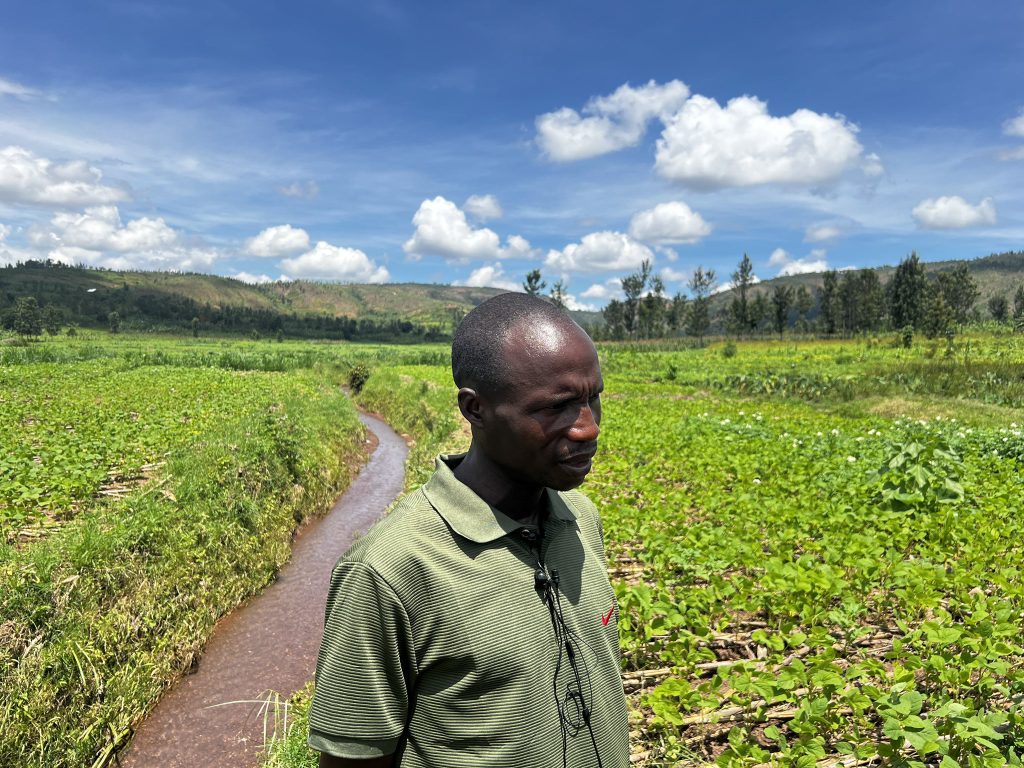
Theoneste insists that the difference is already clear, and he believes "that compared to the previous year's production, this season's production will improve". Beyond that, the cooperatives now also have more trust and assurance in getting markets for their products. For Bosenibo Joseline, a member of the cooperative, "this is a new perspective for rural households as today we grow with assurance for having a market that will sustain fees and family requirements."
Even young farmers are also receiving the fruits of the project. Mutuyimana Innocent, who is now a Farmer Field School trainer for the neighborhood, explains that "agriculture should be taken as a real business." He advocates for the youth, saying that "I tell youth who are joining this farming activity that it should not be taken as a last option of occupation; they should engage in agriculture and make profit as we are able to sell them to buyers."
The experience of ABAKUNDUMURIMO MURUNDI cooperative mirrors the overall goal of FARM P3, which is to facilitate farmers to shift from subsistence to modern, climate-resilient, market-oriented farming. The project supports the maize and soybean value chains, with the support of KIIWP2 and Cordaid.
By Jean Bernard MUKUNDENTE