
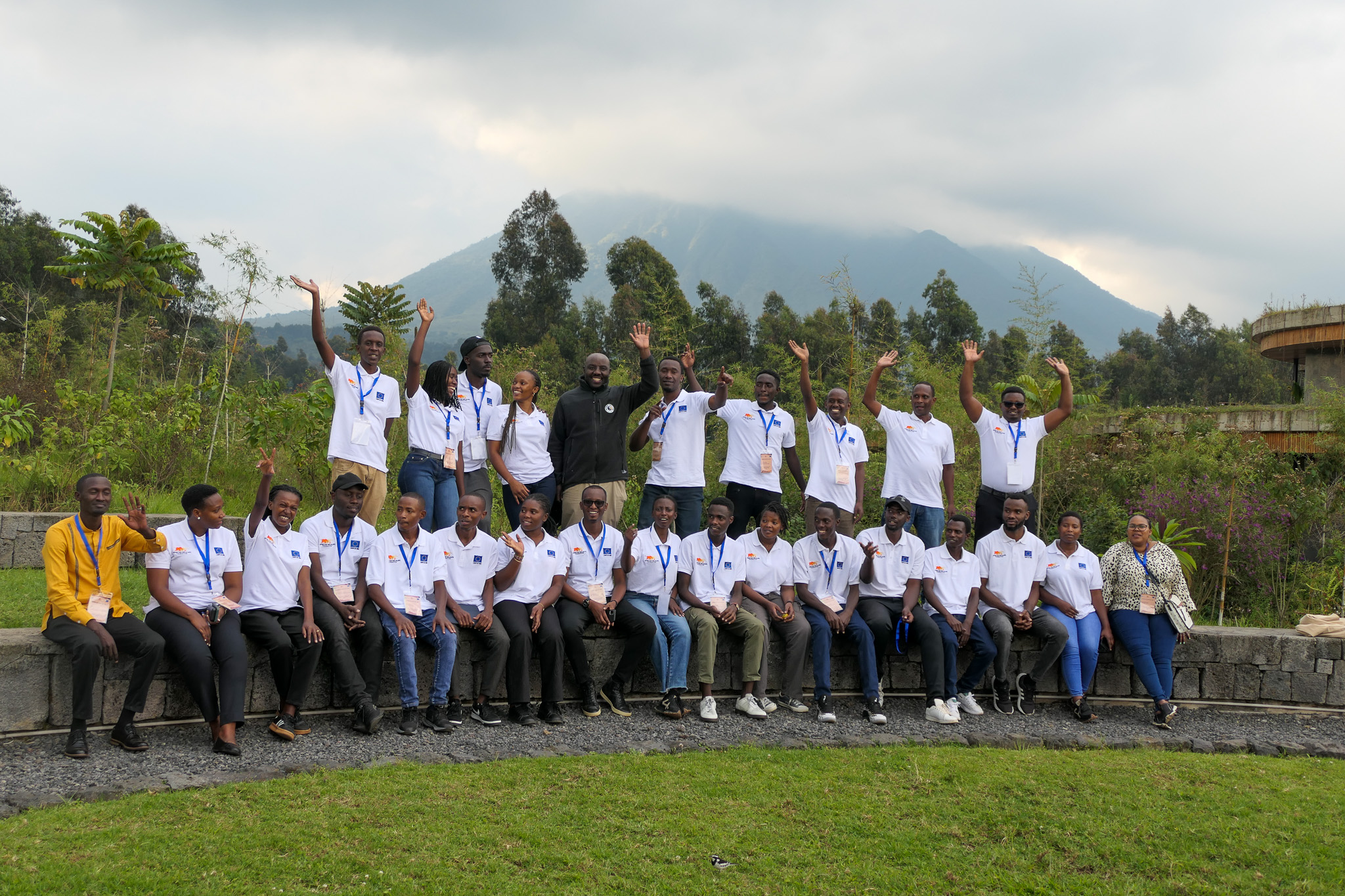
In Musanze, 30 young leaders of five youth organizations joined a four-day training organized by the African Wildlife Foundation and the European Union, which equipped them with skills in biodiversity, climate adaptation, and sustainable livelihoods to strengthen park restoration and enhance community well-being.

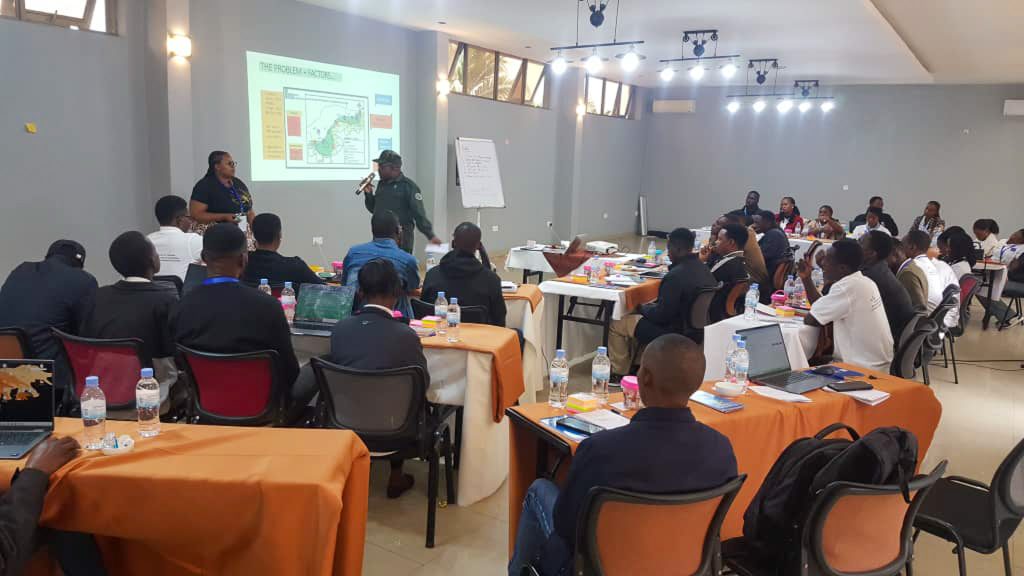
From Aug. 24 to 28, 2025, AWF embarked on providing training for participants as sponsored by the EU in regard to the Volcanoes National Park Landscape Conservation and Development Program. The training was done using theory classes, field visits, and practical project design.
They learned about biodiversity and climate adaptation and solutions based on nature concerning landscape restoration, linking it all to livelihoods resulting from it. Participants had opportunities to practice terracing, composting, rainwater harvesting, project design and proposal writing.
Some of the participants in the training informed EcoAgrimedia that they learned a lot from the workshop. “The workshop helped me see the business opportunities around eco-friendly agribusiness. I look forward to becoming both an ambassador for conservation and a climate change adaptation agent.” Donathi Nemeye from Rwanda Youth in Agribusiness Forum.
I would like to thank the AWF and all partners for organizing this very important training. “I would now know how to distinguish the planetary crises from one another, climate change, pollution, and loss of biodiversity, and this knowledge i gained here will help me communicate scientific information accurately and advocate for conservation in my work as a communication and Public Relations at Rwanda Youth in Agribusiness and a journalist from Ecoagrimedia,” Jean Bernard Mukundente.

According to the AWF website, the youth training in Musanze is part of a broader journey. Over the coming months, participants will continue with advanced modules on project management, financial accountability, monitoring and evaluation, and strategic communications. Each youth-led organization will also be tasked with developing a €7,000 grant proposal, ensuring that their ideas move from theory into action.
These initiatives align closely with Rwanda’s Conservation and Development Master Plan (2024–2030), which prioritizes community involvement, climate resilience, and the expansion of protected areas. By bringing youth into the heart of this process, the program creates a pipeline of leaders who will carry Rwanda’s conservation legacy forward.
As an EU representative noted at the closing session, “Young people are the future of conservation in Rwanda. By empowering them with knowledge, skills, and opportunities, we ensure that landscapes like Volcanoes National Park remain thriving ecosystems that support both people and wildlife.”
AWF Vision is of an Africa where sustainable development includes thriving wildlife and wild lands as a cultural and economic asset for Africa’s future generations.
Written By Jean Bernard MUKUNDENTE