
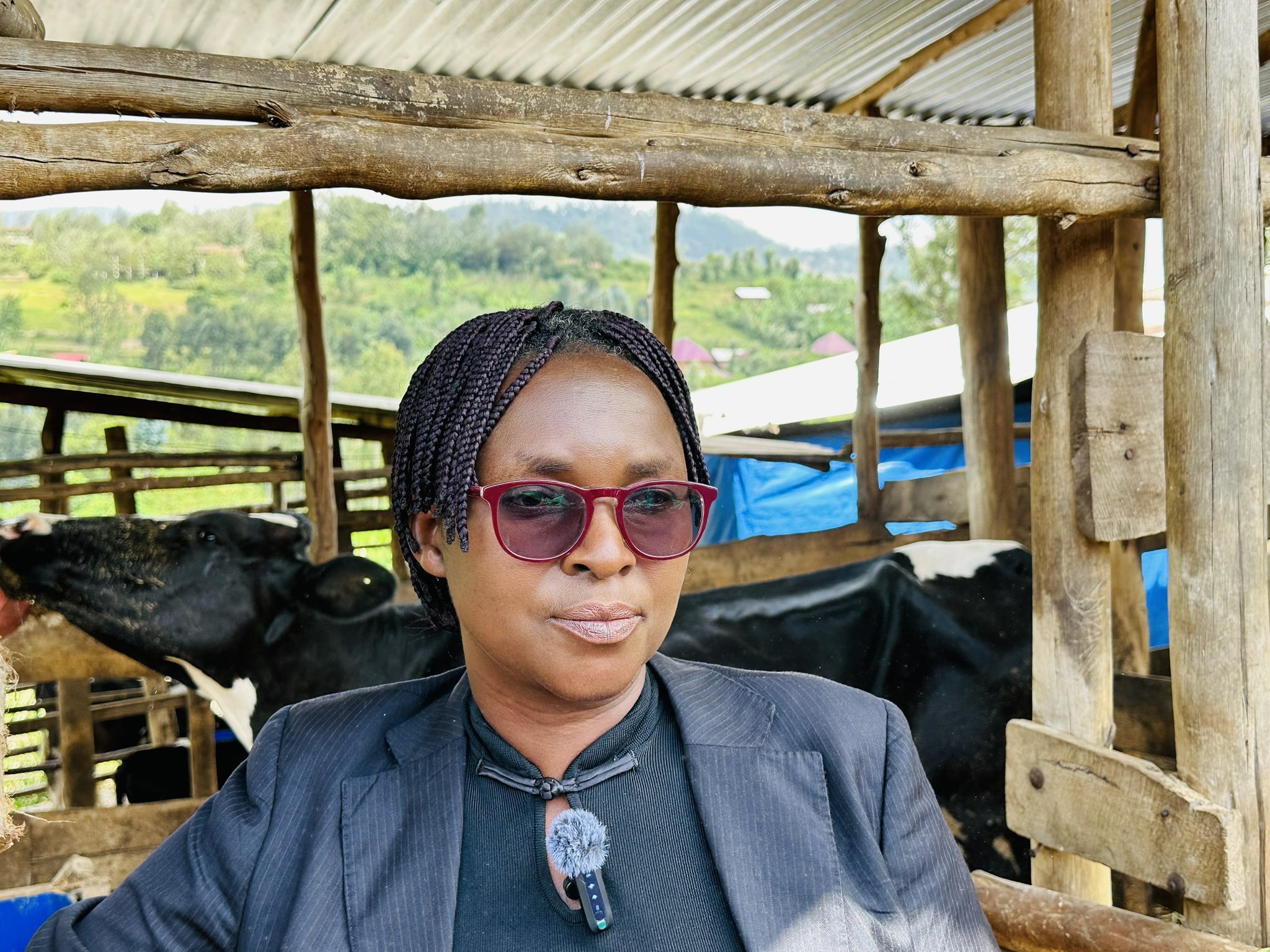
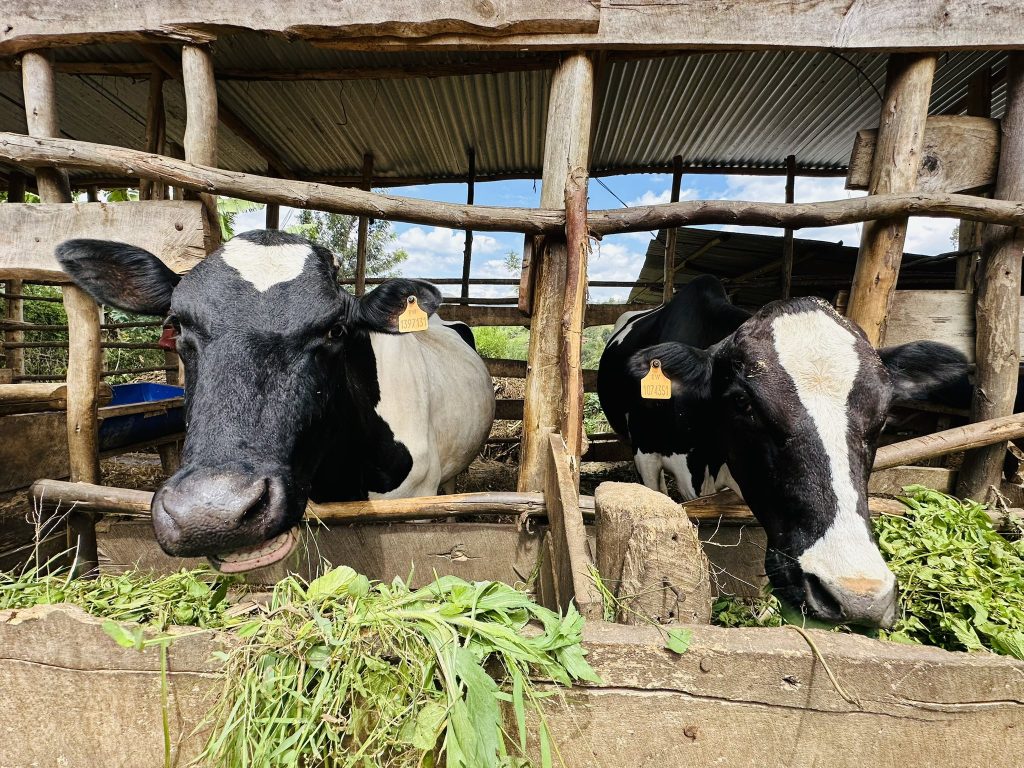
Karongi District, when Josiane Nyiramisago really began dairy farming in 2016, she had only one cow, and that was it. Now, not joking, she looks after a herd of 17 cattle, including 10 dairy cows producing around 100 litres milk a day, every day more or less.
She is based in Rubengera Sector in Western Rwanda and her progress came mostly from steady reinvestment of the milk income, better farm organization, and also the use of livestock insurance so the financial side does not hit her so hard later.
“I started with one cow, and I kept reinvesting what I earned from milk,” she said, kind of simply but clearly.
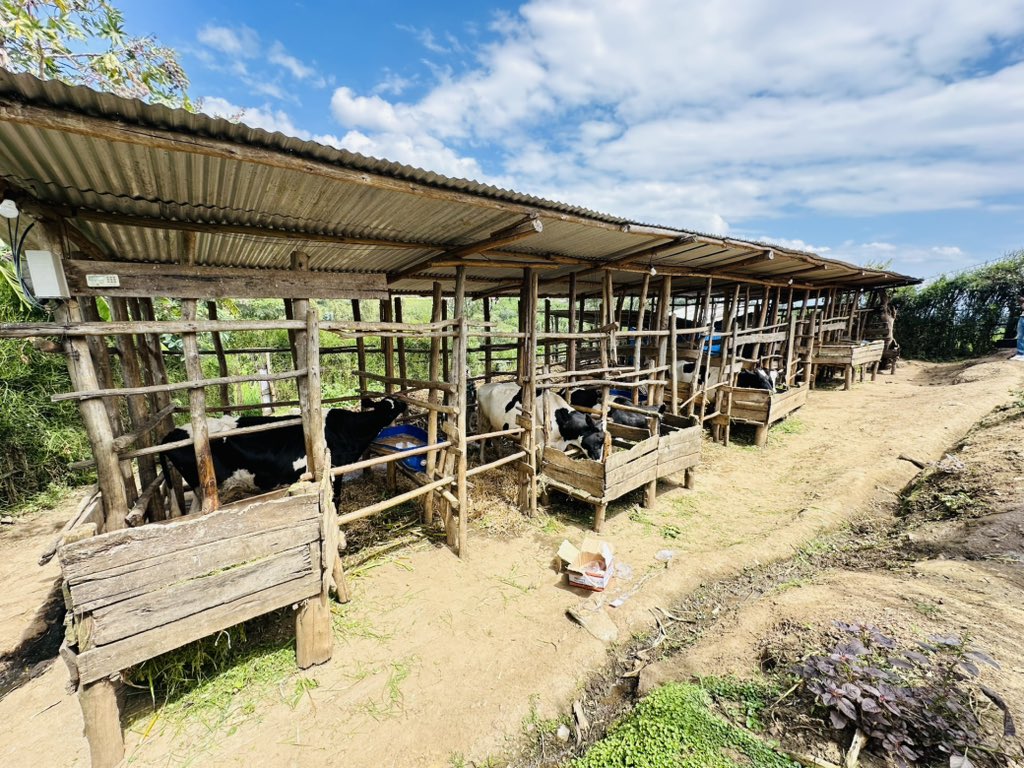
As her output went up, Nyiramisago also widened what she was doing. In 2019, she moved her livestock into upgraded cattle sheds , the kind meant to boost productivity and protect animal wellbeing, or you can say animal health. She even set herself a target, at least RWF 1 million per month from milk.
But then growth came with more dangers too, because usually when things expand risks also show up. In 2021, she enrolled her animals in the Government’s National Agricultural Insurance Scheme (NAIS), Tekana Urishingiwe Muhinzi Mworozi, and here the Government subsidizes 40 percent of the premium, while farmers cover the remaining 60 percent.
The scheme covers dairy cows, breeding animals and young stock against multiple risks, not just one.
Nyiramisago said insurance has been very important in guarding her investment.
“At one point, I lost a cow worth about RWF 800,000. The insurance company compensated me in less than 14 days , and I used that money to get another cow,” she said.
Her herd kept growing, backed by steady milk production and improved management routines.
Her story fits with what is happening across Karongi District too, where more farmers are taking agricultural insurance step by step.
On May 29, 2026, farmers met for an awareness campaign about the national agricultural insurance scheme. District numbers showed that 810 cattle were insured during the 2025–2026 period, which passed the target of 793. Poultry insurance reached 2000 birds, matching the target, while pig insurance rose to 476 animals, and that beat the target of 224.
Those figures suggest more people are adopting insurance, because farmers invest more into livestock and want to protect their assets, even when uncertainties appear.
For Nyiramisago, insurance is now part of her farm routine and also her way of planning for more expansion.
“Insurance gives confidence to invest. When risks are covered you can plan and grow,” she said.
So, her farm has moved from a single cow into a more structured dairy operation, supported by stronger practices and risk management too.