
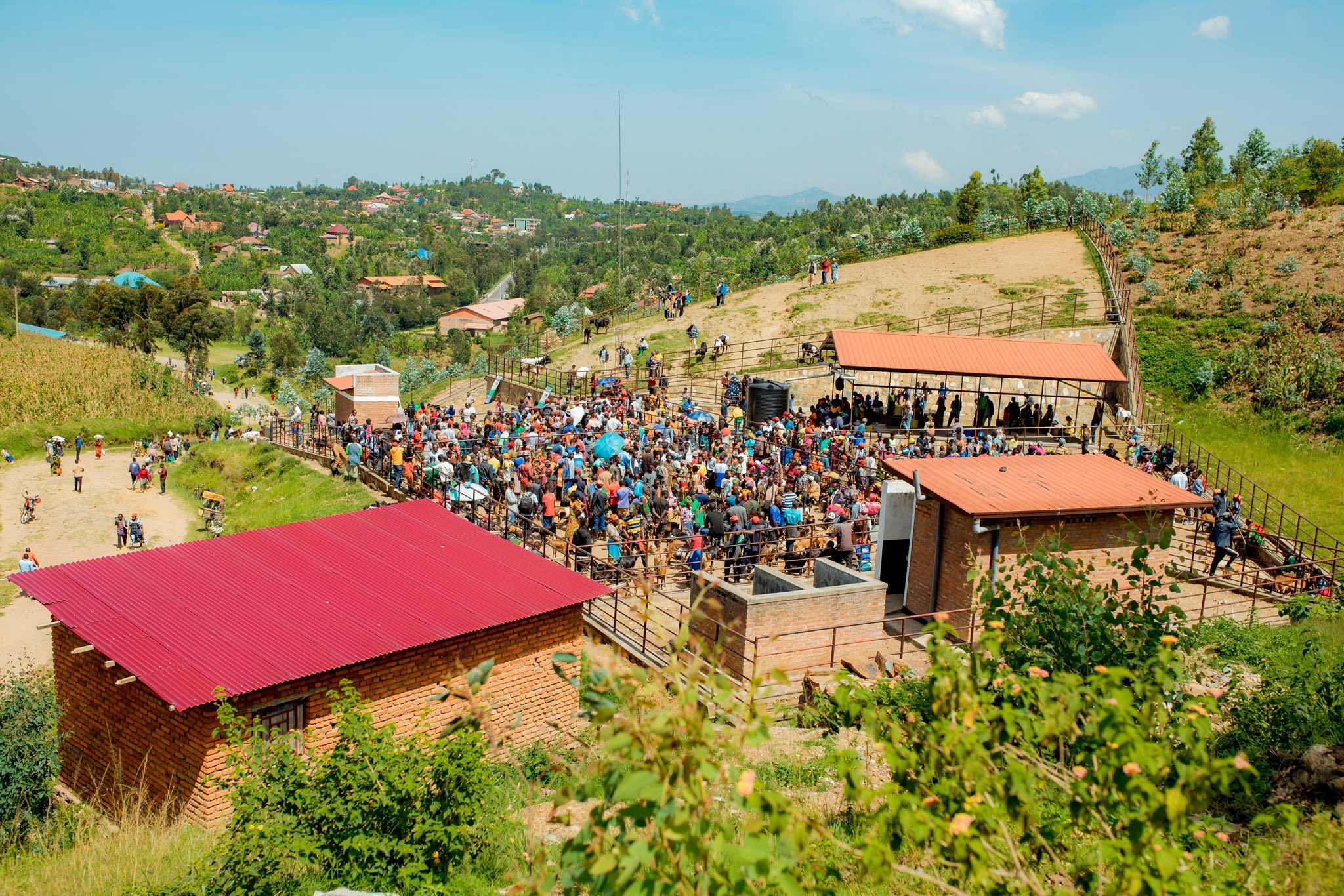
For a long time, livestock farmers and traders in the Karongi District have been doing their business in open spaces, where they are constantly at risk of exposure to adverse weather conditions, stealing, suffering through many losses of livestock from the stress of being moved and sickness.
Buying and selling livestock would also require long-distance, an often lengthy and costly journey before livestock are purchased/sold, and often there are no assurances of getting fair prices, secure transportation, or adequate handling of livestock.
However, this long-standing way of doing business is in the past, thanks to the opening of a modern livestock market within the Rubengera Sector of Karongi District. This new facility was established under the Partnership for Resilient and Inclusive Small Livestock Markets (PRISM) Project to provide a clean, structured and safe place for livestock farmers and traders to conduct business. The market also has multiple well-constructed structures and has clear/best known practices for conducting animals and there are also currently in place best practices for safely handling and managing livestock.
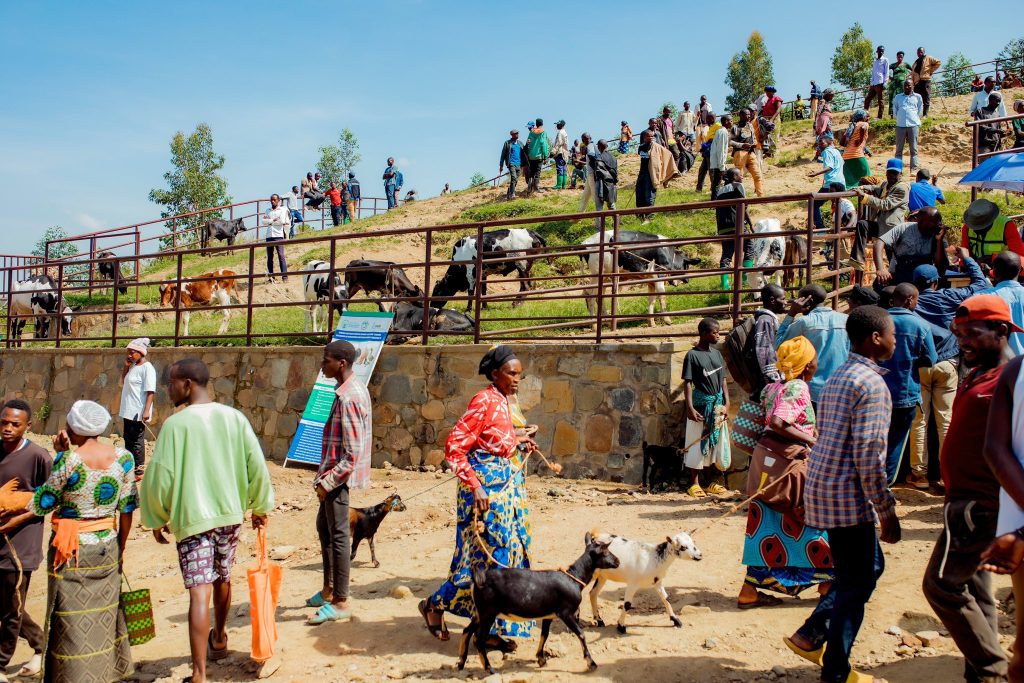
Faster, Safer and More Secure
Farmers such as Louis Ntamakiriro, an agriculture producer from Gitwa Cell located in Rubengera Sector, are experiencing significant change.
“Before, we had to travel almost three hours to get from our farm to the Rugabano market just to be able to buy animals,” says Louis. “Now, we have a market that is close to us, organized and secure. We know exactly where all the animals are; therefore when we want to purchase an animal we are much more confident in our decision making.”
The benefits for sellers also have been very significant as well. According to Mbanenimana Josue who sells goats at the Gitarama Cell market in the Bwishyura Sector, “In the past, goats were mixed together and would be outside exposed to the weather (the sun and/or rain). All of these conditions caused stress, disease and ultimately loss for sellers.” With the new market, Josue said, “The goats are protected as all animals are separated by species and we as the sellers are not required to pay a tax on our sales.”
More Than a Market
The Rubengera Livestock Market provides a new way forward for farmers in terms of building resilience and creating sustainable livelihoods. The Livestock Market through the PRISM project provides a process that allows farmers better ability to access the market and have been supported through investments in infrastructure.
To support livestock production and improve the welfare of households, PRISM has installed 162 solar modular systems to provide energy access and has provided 126 water cisterns that provide both livestock and domestic water needs. These investments will allow farmers to reduce the production risk and improve their efficiency from farm to market.
Building Resilience at Community Level
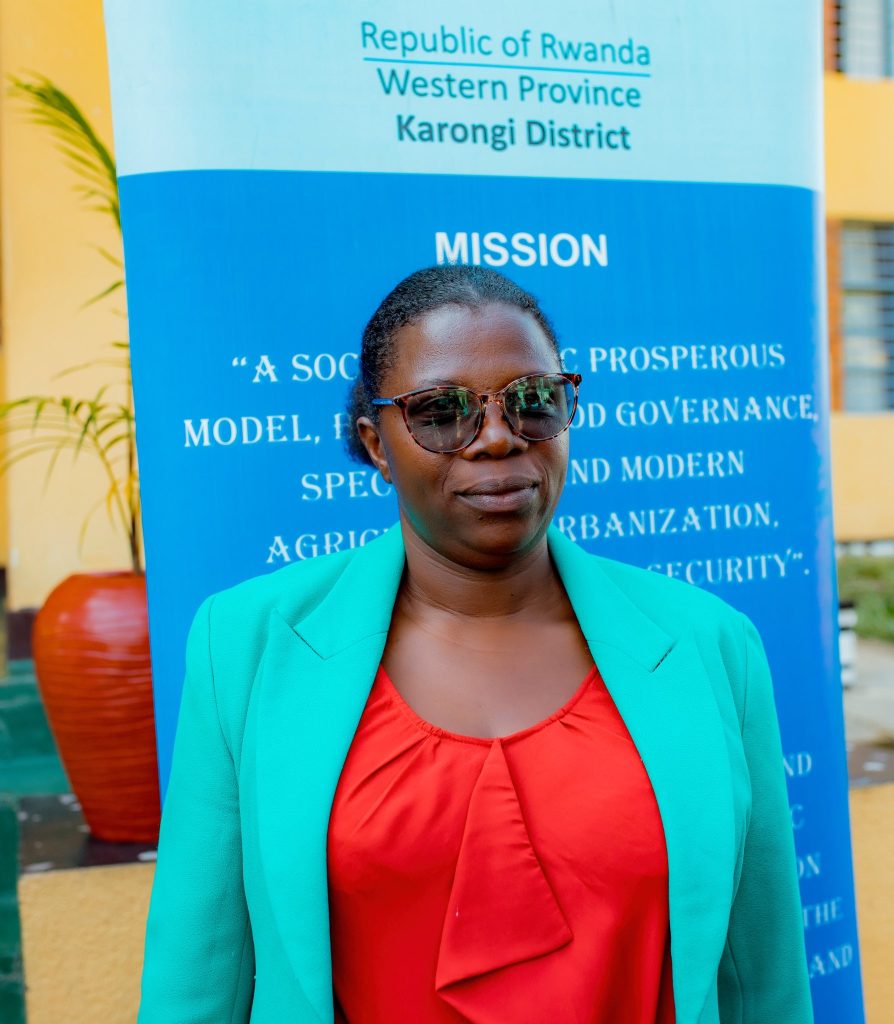
The Project has been positively viewed as a catalyst for both social and economic growth by local officials. According to Umuhoza Pascasie, the Vice Mayor responsible for Social Affairs at the Karongi District, this has a significant effect on the projects larger social and economic benefits.
“As a result of its assistance with live stock production, infrastructure, and training for the farmers, PRISM has enabled many families to have an improved quality of life and helped to build the resilience of our communities,” she said. “In this way, the initiatives we are implementing through the PRISM program are transitioning households out of poverty into more sustainable ways to make a living.”
The PRISM project was introduced to the residents of the Karongi District in October of 2021. The PRISM project will continue to enhance the chicken, pig, and goat agricultural value chains through the end of September in 2026.
PRISM Farmers with Concrete Results
So far, the PRISM project has trained a total of 8,518 farmers through targeted capacity-building activities and has also provided 4,576 livestock to those farmers. There are now 10,104 livestock due to the reproduction of livestock and cooperative sharing between all farmers involved in the project. This will benefit many farmers who have not participated directly in the PRISM project.
A significant result of the initiative is that it has helped farmers with their ongoing dilemma regarding limited access to dependable markets. By helping to set up livestock markets and slaughterhouses for livestock, PRISM has made it possible for farmers to market/exchange their livestock under more reliable, safe, organized, and profitable circumstances.
According to goat producer, Havugimana Felicien, who farmed in the Karongi District, the results are obvious. “My production of goat sales has gone up and the profits I receive for my goats are also better than before,” he indicated.
His spouse, Uwitonze Gentile, who produces poultry, said the new market brought “more security” to their family. “Because we now have a stable working market, we are able to have some confidence for the future: Our livestock will always have a place to be sold when we raise them and therefore we are able to [plan] for the future.”
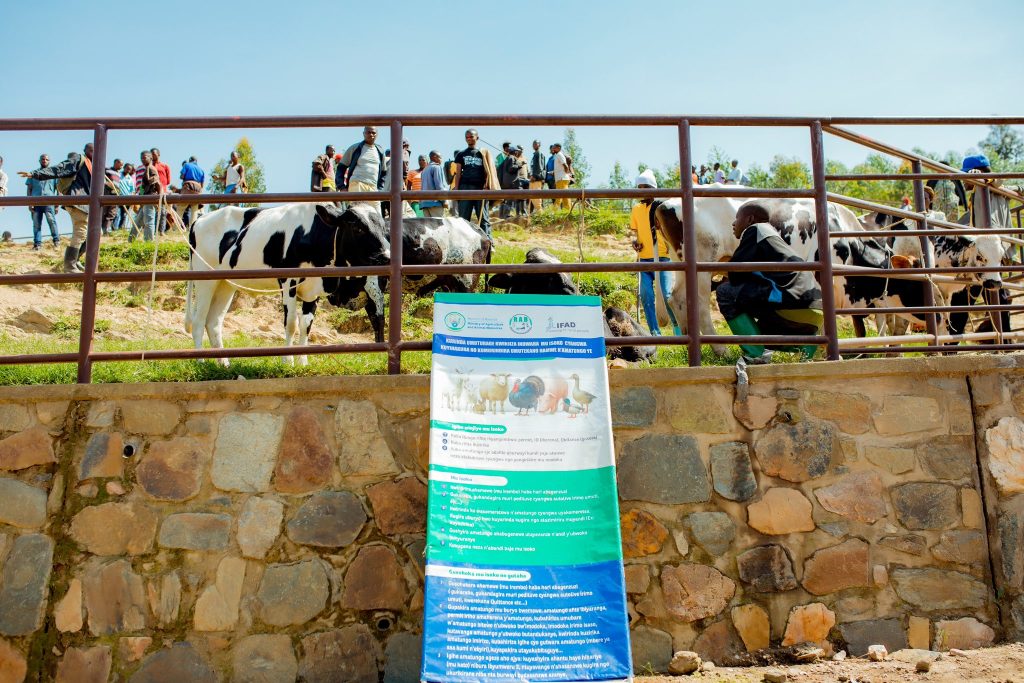
A Symbol of Growth and Confidence
The Rubengera livestock market is no longer just a market for buying and selling livestock; it is now seen by many farmers in Karongi District as an opportunity, a source of job security, and a vehicle for development. It is also an example of how well-directed, inclusive investment in livestock markets can stimulate rural economies and develop sustainable means of making a living at the farm level.
Written By Jean Bernard MUKUNDENTE