
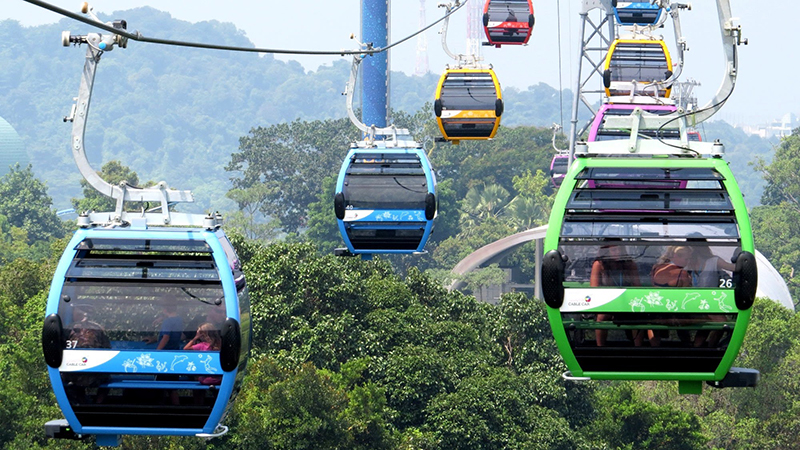
The City of Kigali conducts research about implementing a cable car transport system because this system will help solve traffic problems and enable environmentally friendly transportation throughout the city.
Feasibility studies currently underway will determine project implementation according to city authorities who confirmed their ongoing work. The proposed system would offer an alternative to road transport, which would decrease street traffic while cutting down on vehicle emissions.
Kigali City Mayor Samuel Dusengiyumva spoke to journalists on January 21 about the initiative which the Government of Rwanda currently develops at its assessment stage.
"The cable car project currently undergoes research studies. The public will receive updates after the research finishes. The government leads this project which will create a new transportation system to facilitate city movement while decreasing air pollution," according to Dusengiyumva.
Ropeways Transit Rwanda Limited (RTRL) conducts the feasibility work through its multidisciplinary team which evaluates technical and financial and environmental aspects of the project. RTRL has selected Doppelmayr, an Austrian company with international experience in building aerial ropeway systems, to manage the construction operations.
The African Development Bank approved a US$500,000 grant in June last year to fund a pilot feasibility study, which will examine demand through routing analysis and implementation option evaluation. The study will decide on project scaling according to officials.
If approved, Rwanda would become the first African country to deploy cable cars as a public urban transport mode.
The initial phase proposes a 5.5-kilometre network with an estimated cost of about US$100 million, which will decrease traffic jams and greenhouse gas emissions while improving job access and essential services for residents living in remote locations.
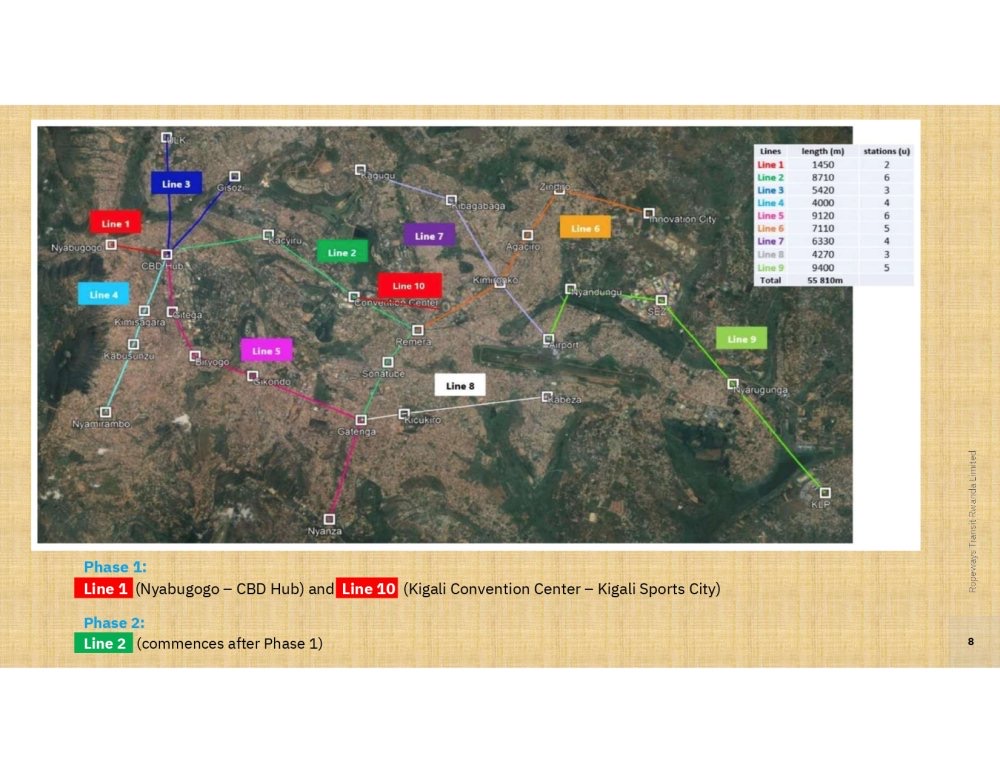
The first phase will establish two routes: one route travels from Nyabugogo Bus Terminal to the central business district while the other route connects Kigali Convention Centre to Remera, which serves as an important sports and events venue.
The first phase construction will start toward the end of 2026 and continue until 2028.
The system will handle more than 50,000 daily passengers after it starts operation, with each trip averaging 15 minutes.
International investment opportunities become available to officials after they complete the studies. Rwanda compares its proposal against existing cable car systems in La Paz and Singapore.
Akinwumi Adesina, former AfDB president, expressed that the initiative aligns with the bank's sustainable development goals and climate-friendly urban infrastructure development plans.
RTRL Chief Executive Muyiwa Omololu announced that talks with prospective investors are currently proceeding, which includes negotiations with Nigerian industrialist Aliko Dangote for project funding after final project approval.
