
As the Green Gicumbi project draws to a close, its activities have left a visible legacy in the Gicumbi district. It was a project designed to help people cope with the effects of climate change, protect the mountains and forests, and promote sustainable agriculture.
Combating erosion and soil degradation
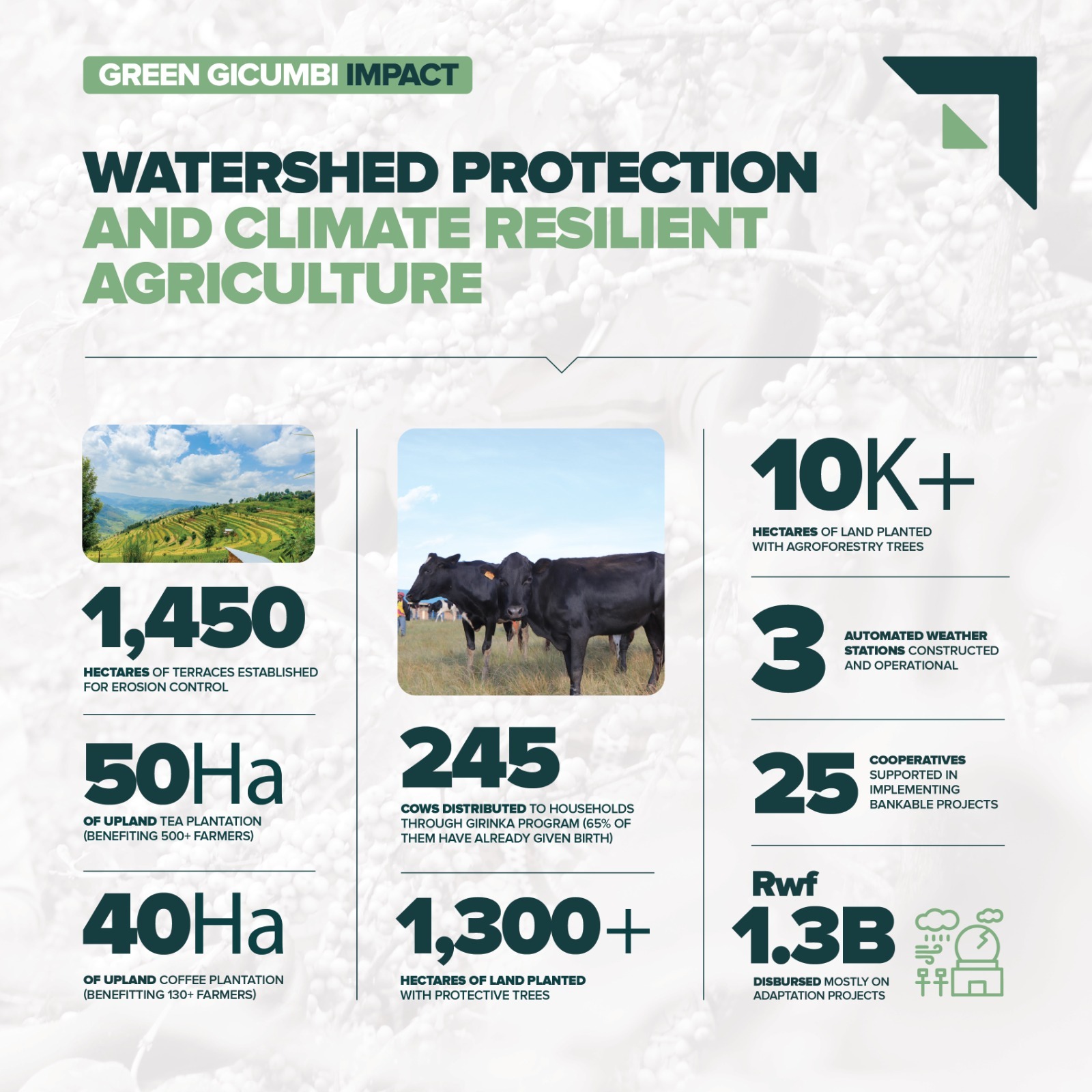
1,450 hectares of terraces were built on steep hills, with the aim of combating erosion.
1,300+ hectares were planted with soil-protecting trees, while more than 10,000 hectares were planted with agroforestry trees, which allowed the land to recover and produce.
Agriculture helps people get out of poverty
50 hectares of tea and 40 hectares of coffee were planted in the highlands, helping more than 630 farmers increase their production and find a market.
Girinka improved their living standards
245 residents received cows through the Girinka program, of which 65% have already given birth. This has led to increased milk production and increased fertilizer use.
Learning from weather information
3 automated weather stations were installed, helping farmers know the best time to plant, harvest and manage disasters.
Cooperatives developed
25 cooperatives received training and assistance in preparing and implementing projects that are well-managed, profitable, and sustainable in the market.
Investing in climate change
During this project, more than 1.3 billion Rwf were invested in activities to help communities adapt to climate change and continue to live sustainably.
Green Gicumbi left behind a powerful lesson: sustainable development is possible when it is based on community-based, collaborative, and environmentally friendly solutions.
Although its activities have ended, what remains will continue to be the foundation for the resilience and development of the people of Gicumbi and across Rwanda.