
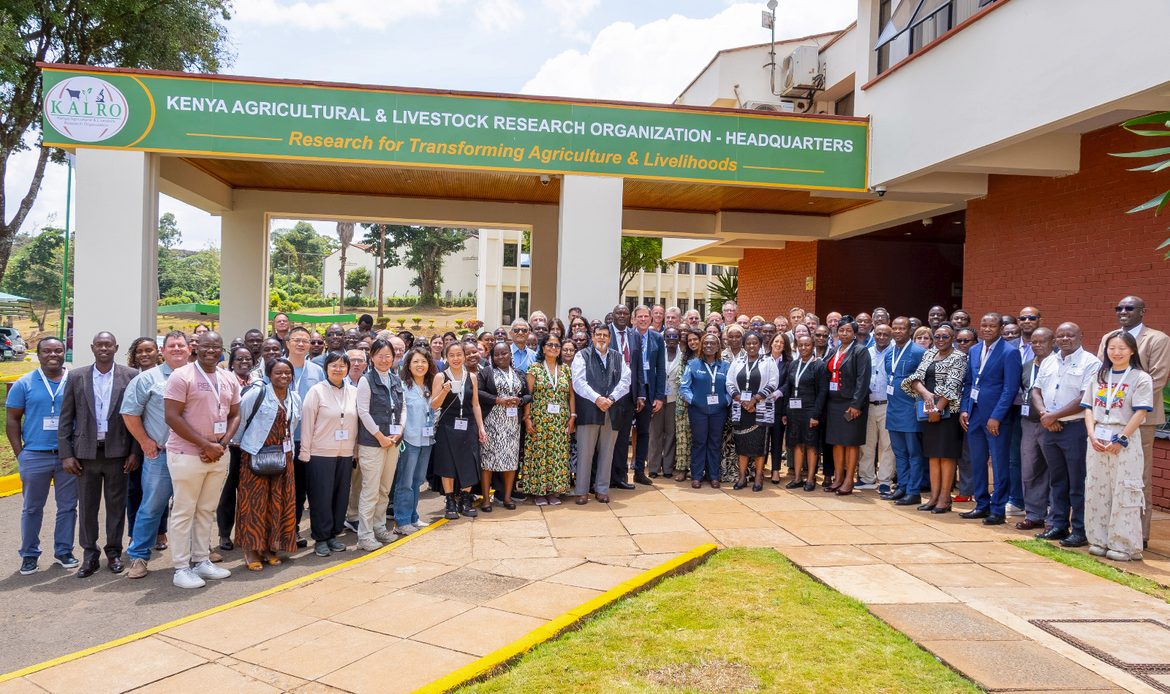
AFAAS says stronger links between researchers, agricultural advisers and farming communities are needed to help farmers access affordable alternatives to chemical pesticides.
African farmers basically need better training, more trustworthy information and some kind of access to reasonably priced biological pest control tools, the African Forum for Agricultural Advisory Services (AFAAS) has said, kind of clearly.
It made that call at an international symposium in Kenya, where specialists are talking about how to push the use of biological methods for crop pests, and honestly how to make it stick.
Dr L ilian Lihasi, the executive director of AFAAS said, scientific progress has to translate into practical solutions that farmers can use directly in their fields, not in theory only .

She spoke at the seventh International Symposium on Biological Control of Arthropods (ISBCA7) which is scheduled from 26 to 30 October 2026.
The gathering is the first one in that series to be hosted on the African continent. It is co-hosted by the Centre for Agriculture and Bioscience International (CABI) and the Kenya Agricultural and Livestock Research Organization (KALRO) at KALRO headquarters in Lorestho.
The symposium brings together representatives from research organisations, industry groups and policy institutions, to share knowledge and strengthen international partnerships.
During a panel discussion titled How value chain actors shape the uptake of bioprotection solutions, Dr Lihasi underlined the role of agricultural advisory services in helping farmers turn scientific knowledge into practical action, step by step.
Biological crop protection, uses natural enemies of pests as well as other biological approaches to help safeguard crops. But, having these solutions available does not automatically mean farmers will pick them up and adopt them.
AFAAS says farmers should have reliable evidence, straightforward guidance , solid supplies and a clear sense of the costs plus the benefits.
It pointed to three big obstacles: limited technical know-how, trouble finding affordable products and weak coordination among institutions.
The organisation called for strong regulation, quality checks, and incentives so farmers can handle the expenses and risks that come with shifting from established farming routines.
The target is to lower unnecessary reliance on chemical pesticides without denting agricultural output or blocking market access, while also protecting human health, the environment and rural livelihoods.
Some lessons from Uganda and Madagascar show how advisory services can help farming communities explore alternative pest control strategies.
In Uganda, 30 rural advisory facilitators were trained to support farmers in agroecological pest management, including using locally prepared biopesticides.
In Madagascar, communities used video based learning sessions and field experiments, to test approaches that fit local realities, including managing rice pests.
Dr Lihasi said farmers should be part of testing and assessing new approaches, not treated only as receivers of new technology.
AFAAS also highlighted biological control efforts aimed at mango mealybug in Burundi, Rwanda , and Uganda.
Based on findings shared by Dr Lihasi, joint surveys in 2024 logged collapsed pest populations after the introduction of parasitoids, with around 250,000 trees reported as freed from infestation.
Parasitoids are organisms that develop on or inside other insects, and they can help keep pest populations under control.
That example, it shows the importance of integrated pest management and the need to avoid pesticide use that is too indiscriminate since it can harm beneficial insects.
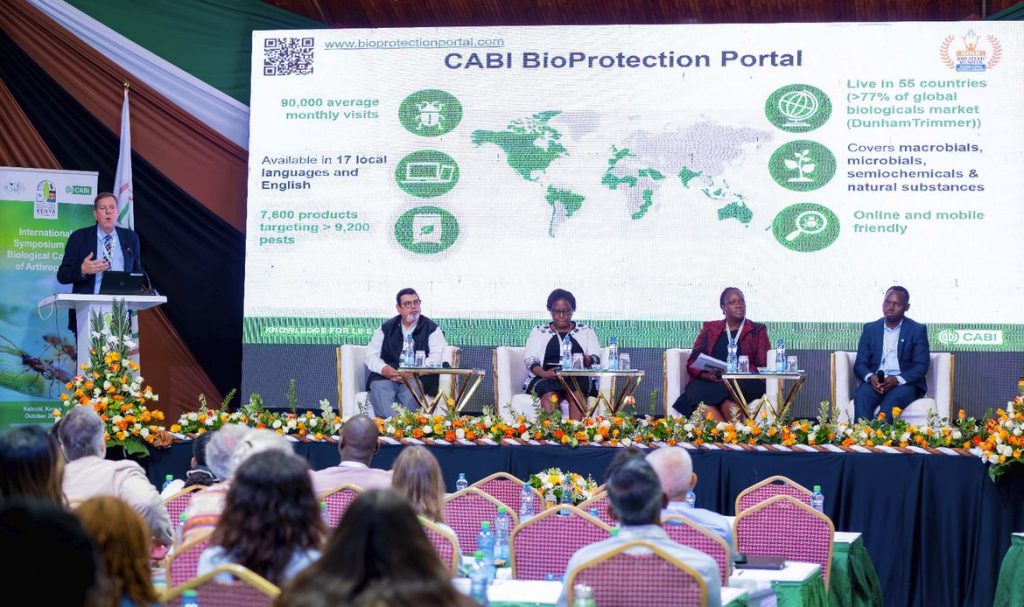
AFAAS laid out three priorities for boosting uptake of biological crop protection.
These include building technical capability through its national Country Fora, coordinating partnerships via the Africa Extension Coalition, and widening access to trusted information through digital platforms.
The Country Fora bring researchers together with agricultural advisers, farmer organisations, businesses, and policymakers so they can tackle the issues faced by farming communities.
The Africa Extension Coalition, organized with partners such as AGRA and One Acre Fund, aims to improve coordination and strengthen the delivery of agricultural advice.
AFAAS also plans to use its Digital Users Platform to link agricultural advisers and agrodealers with validated information, using existing advisory services as the base rather than creating a separate system from nothing.
Dr Lihasi noted that real adoption requires cooperation across the agricultural sector.
Researchers have to identify which methods work, governments must put in place enabling policies, suppliers should ensure products are accessible and meet quality standards, and agricultural advisers have to help farmers apply them properly.
Farmer organisations, she said, should also shape and evaluate the solutions meant for their members.
Kenya hosting the first continental African version of the symposium creates a chance to lift African research and also insert real local farm experience into bigger international conversations.
For AFAAS, the core challenge is ensuring that scientific advances become practical solutions that farmers can access, understand, and afford.
The organisation adds that stronger linkages between researchers, advisory services, suppliers and farming communities will be vital for expanding biological crop protection across Africa.
Overall, the larger aim is to help farmers manage crop pests effectively while protecting human health, the environment, and rural livelihoods.
Source: African Forum for Agricultural Advisory Services (AFAAS)