
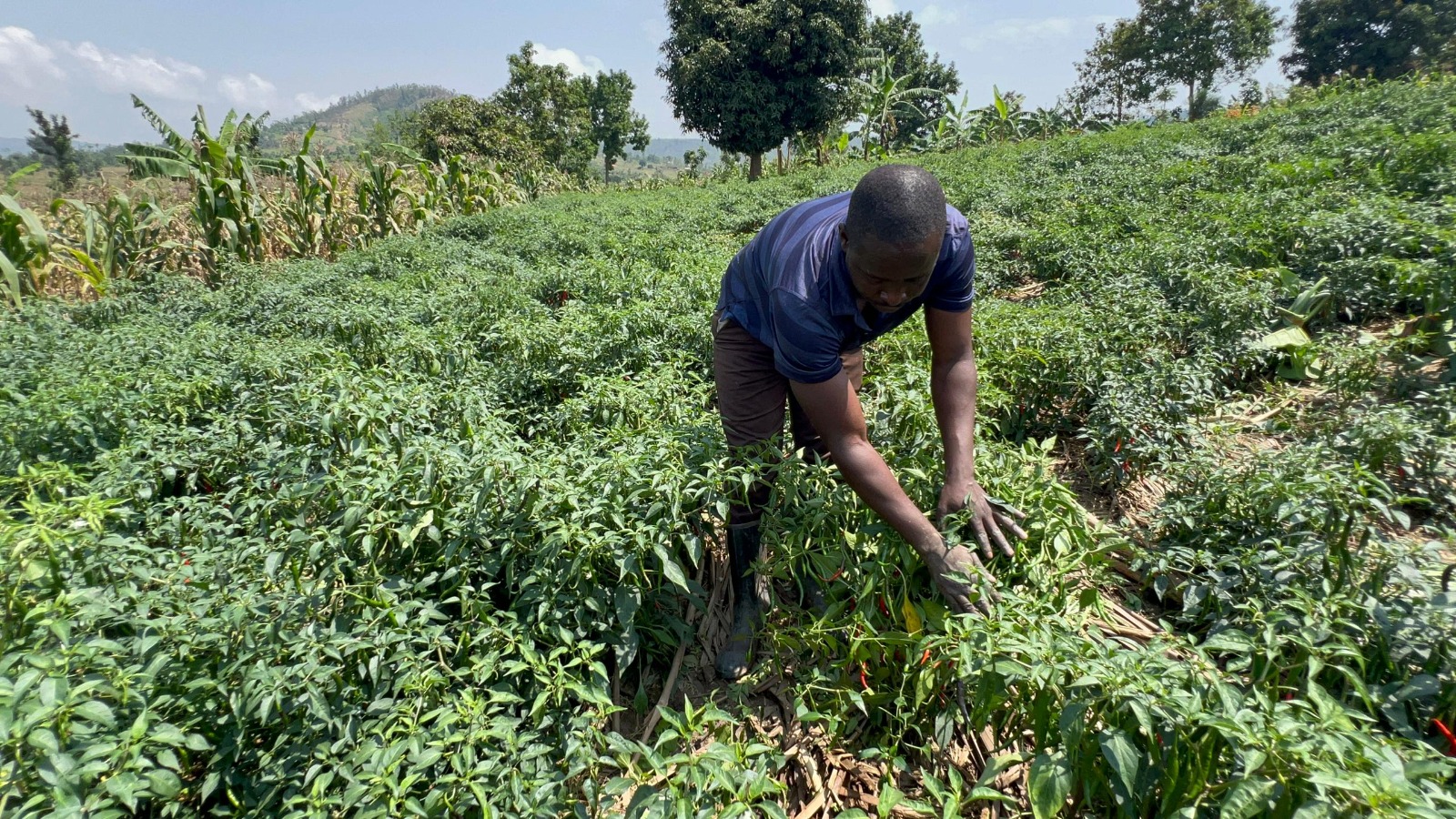
Agricultural life in Kabeza village, located in Nyamugali Sector of the Kirehe District, is defined by stability and increased yields due to irrigation restoration and good practices through training in the Sustainable Agricultural Intensification and Food Security Project II (SAIP II). As a result of this assistance, the way farmers produce crops and their perceptions of agricultural practices are changing.
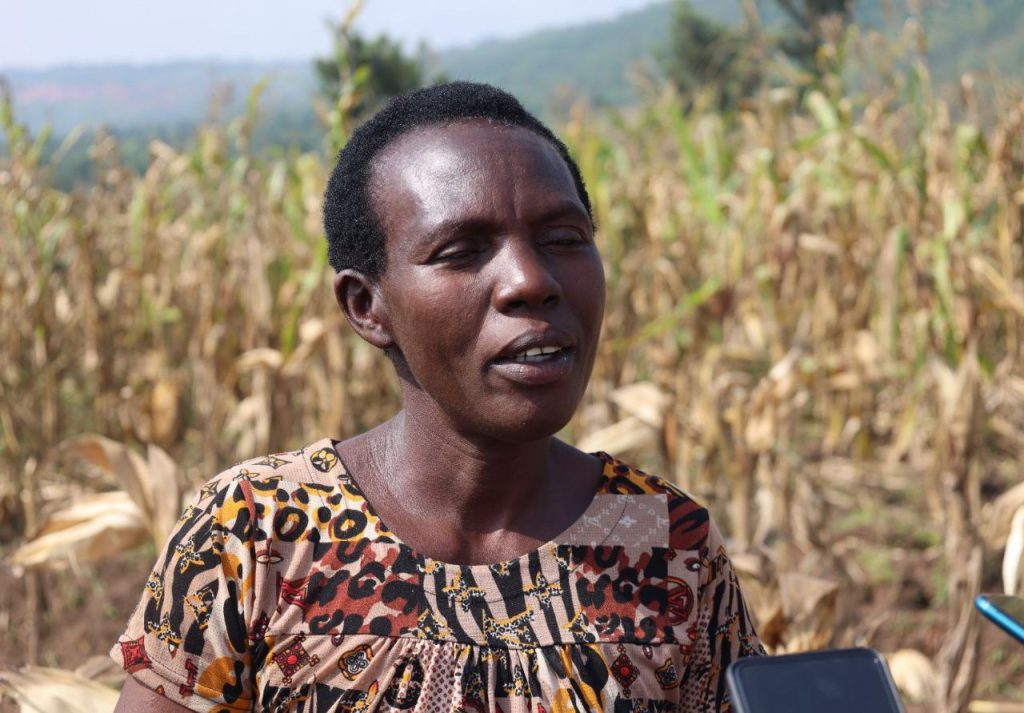
“While I was still mixed cropping with no real understanding of improved agricultural practices, I had a difficult time feeding my family,” says Beatrice Nzamwita (a member of a cooperative and mother of five). “The productivity of my land was not reliable, nor would it frequently provide enough food for my family to survive.”
Thus, I began to plant tomatoes on land provided by government-supported program connected to SAIP II and was able to attend structured education programs in vegetable and fruit production, which eventually led to my learning modern maize production methods.
Thereafter, the quantity of maize I grew was less than 100 kg, however my recent production has increased to enough to maintain a constant food supply for my family and pay for my children to go to school.
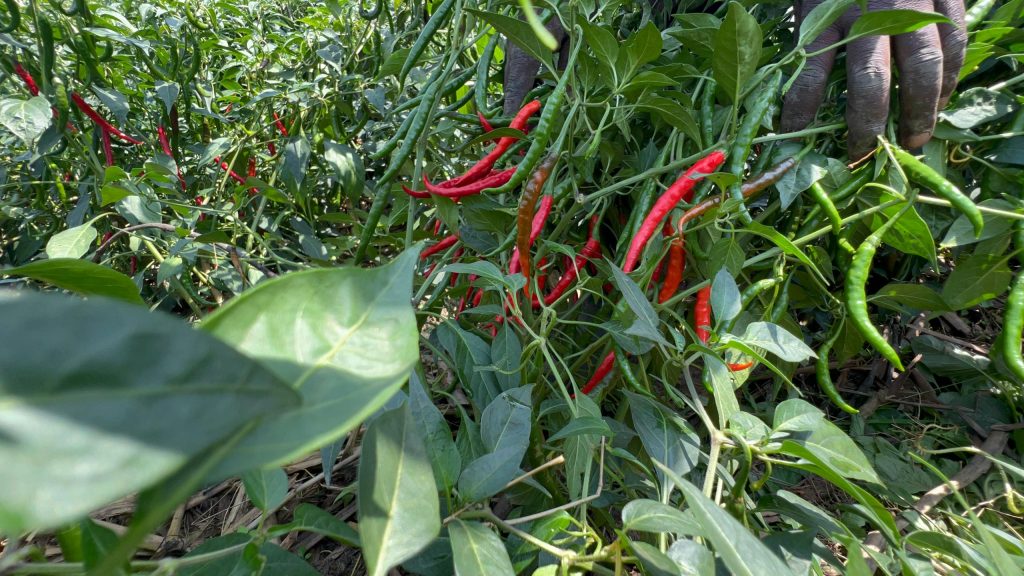
Irrigation has been pivotal in transforming the excess of agricultural production into a sufficient amount for the district throughout the whole community. Rehabilitation works and expansion works to the irrigation dam have reversed a long-standing trend of declining water levels due to damage and blockages along irrigation canals and have inhibited the ability to grow crops during the dry season.
Today the irrigation reservoir has 500,000 cubic metres of water available for year-round crop production. Farmers no longer have to rely solely upon rainfall for all of their farming, but can do so on a more predictable basis.
For a local farmer in the Kigarama sector, Iringirimana Samuel, the combination of infrastructure (i.e. irrigation) and training has allowed him to develop his farm operations to new levels of production.
Samuel started with 18 ares of land for growing chilli peppers but experienced many problems associated with poor seed management and costly irrigation techniques.
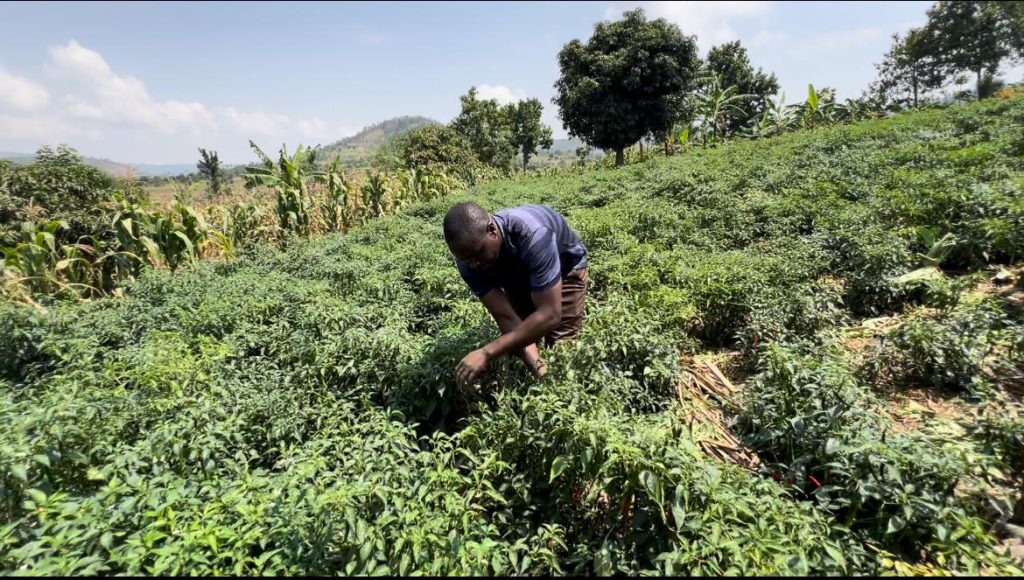
“Training has given me the ability to understand the importance of growing crops within the principles of monocropping and the proper procedures of post-harvest handling, as well as how to effectively work with extension staff", Samuel said. "I have learned that I can run my orchards as a business".
Samuel has increased the size of his operation from 18 ares to more than 3 hectares of land for growing chilli peppers, while also reducing his total operating costs through access to improved seed varieties and using more efficient irrigation systems.
According to district statistics on maize yields, the average yield has increased from 2.5 tonnes per hectare to 4 tonnes per hectare since the establishment of new irrigation reservoir infrastructures. Because the majority of the district's economy is based upon agricultural production, these increases in agricultural production volumes have meaningful economic impacts throughout the district.
The SAIP II Project is a single project implementation unit of the Rwandan Agriculture and Animal Resources Development Board (RAB) and is funded by the Global Agriculture and Food Security Program through the International Development Association of the World Bank Group.
The goal of SAIP II is to increase the production of food, improve value chain and access to markets, and improve rural communities’ resilience.
In Kirehe, the changes are visible in both increased yields and attitude changes.
“Cassava, maize, vegetables, we now do business with markets,” Beatrice says. “Agriculture is no longer for survival; it is a means of developing a bright future.”
Alice DUSABIMANA


